
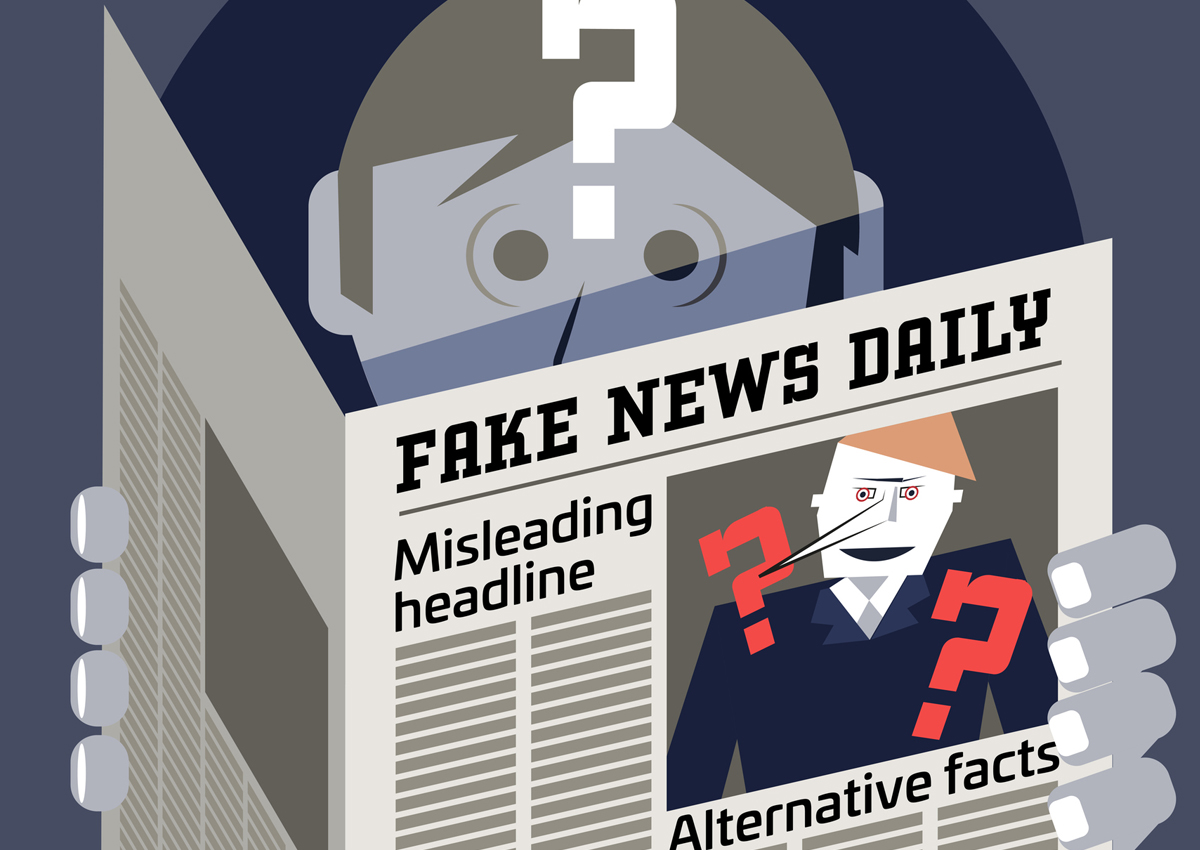
Fact-checking is no longer just for professional journalists — it is a core digital literacy skill for anyone who consumes and shares news. This guide covers how to fact-check news articles using tools and techniques that anyone can learn, taking most fact-checks from five minutes to thirty seconds with practice.
The Professional Fact-Checking Organisations
Before doing your own fact-checking, check whether professionals have already done it. Several organisations exist specifically to verify claims in public discourse How to Fact-Check News Articles:
Snopes (snopes.com): The oldest and most comprehensive English-language fact-checking site, covering viral claims, political statements, and urban legends since 1994. Strong on viral social media claims and recurring misinformation.
PolitiFact (politifact.com): Specialises in US political claims with a detailed Truth-O-Meter rating system from “True” to “Pants on Fire.” Part of the Poynter Institute.
FactCheck.org: Run by the Annenberg Public Policy Center at the University of Pennsylvania. Focuses on US political claims with careful, citation-heavy methodology.
Full Fact (fullfact.org): The UK’s independent fact-checking charity. Covers British politics, public health claims, and viral UK social media content.
BOOM Live (boomlive.in): India’s leading fact-checking organisation, covering claims in Hindi and English. Essential for verifying news about India and South Asia.
AFP Fact Check, Reuters Fact Check, AP Fact Check: Wire service fact-checking desks that focus on viral international claims and political statements globally.
Reverse Image Search: The Fastest Visual Fact-Check
A significant proportion of misinformation involves images presented out of context — real images from different events, different countries, or different years presented as if they document a current story. Reverse image search identifies where an image originally appeared.
How to do it: Right-click any image in Chrome and select “Search image with Google.” Or upload or paste an image URL to images.google.com. TinEye (tineye.com) is an alternative with a larger archive of older images. Yandex Image Search often finds results that Google misses, particularly for images from Eastern Europe and Russia.
How to Fact-Check News Articles, This technique is the single most powerful quick fact-check available because visual misinformation is so common and so easy to detect. Checking viral images before sharing them is one of the highest-impact habits for reducing misinformation spread. This connects directly to reading news critically — the foundational media literacy skill.
Verifying Statistics and Data Claims
Statistical claims in news articles are frequently accurate but misleadingly framed. Key questions to ask: What is the base rate? A 100% increase from 1 to 2 is trivial; a 2% increase from 1 billion is significant. What is the time period? Crime “up 20%” this month versus last year versus last decade tells very different stories. What is the source? Government statistics agencies, peer-reviewed journals, and established research institutions are far more reliable than advocacy organisations or anonymous reports.
For economic statistics: the US Bureau of Labor Statistics (bls.gov), UK Office for National Statistics (ons.gov.uk), and World Bank Open Data (data.worldbank.org) provide primary source data for most major economic claims. When an article cites a statistic, finding the primary source takes 2–3 minutes and immediately reveals whether the statistic is being accurately represented.
A Step-by-Step Fact-Check for Any News Story
Step 1: Check the URL and source name — is this a known outlet with a clear editorial policy? Step 2: Check the date — is this current or an old story recirculating? Step 3: Search the claim on a professional fact-checking site. Step 4: If an image is involved, reverse image search it. Step 5: Find the primary source of any statistics or quotes cited. Step 6: Check whether multiple independent reputable outlets are reporting the same facts.
These six steps take under five minutes and dramatically improve the accuracy of what you share and believe. Understanding how media bias works alongside fact-checking skills gives you the most complete toolkit for evaluating news.
The Most Common Types of Misinformation
Fabricated content: Entirely false information with no basis in fact, created deliberately to deceive. The most dangerous category — no kernel of truth to anchor evaluation.
Manipulated content: Genuine images or documents that have been altered to change their meaning. Common in political contexts — official statements edited, images cropped or coloured to distort their message.
False context: Genuine content shared with incorrect contextual information — a real photo from one event presented as if it shows a different event. This is the most common category and the one reverse image search most directly addresses.
Misleading framing: Technically accurate facts presented in a way that creates a false impression. Statistics cherry-picked for effect, quotes taken out of context, headlines that do not match the article body. This requires reading full articles and checking original sources — the most time-consuming but most necessary fact-checking step. Knowing what sensationalism in news media looks like helps you spot misleading framing quickly How to Fact-Check News Articles.
Frequently Asked Questions
Can AI tools reliably fact-check articles?
AI tools including large language models can assist with fact-checking by helping identify claims, suggesting search queries, and explaining context — but they cannot reliably verify real-time facts, may have outdated information, and can confidently state incorrect information. AI should be used as a research assistant in fact-checking, not as a definitive arbiter. Professional fact-checkers at organisations like Snopes and PolitiFact use AI tools to assist their work but always apply human judgment and primary source verification before publishing conclusions.
What should I do if I have already shared something that turns out to be false?
Delete or correct the original post immediately. Share a correction explicitly noting that you previously shared incorrect information — do not just quietly delete. If the misinformation has spread significantly, consider tagging accounts that reshared from you with the correction. Research shows corrections are more effective when they come from the original sharer than from strangers. The embarrassment of public correction is significantly less socially costly than the ongoing spread of misinformation you originated.
How long does it take to fact-check an article properly?
A basic fact-check — source check, date check, reverse image search if relevant, one search on a fact-checking site — takes 2–5 minutes for most claims. A thorough fact-check of a complex article with multiple statistical claims can take 20–30 minutes. In practice, applying the quick version to everything you are about to share and the thorough version to anything with significant claims that you want to rely on covers the most important bases. Building the habit of any fact-checking is more valuable than occasionally doing exhaustive checks How to Fact-Check News Articles.

The official voice of Insightful Post, providing real-time updates on the stories that shape our world. From breaking global news to essential general reporting, the Admin team is dedicated to delivering accurate, timely, and unbiased information. Our mission is to keep you informed with the facts, ensuring the Insightful Post community never misses a beat in the fast-paced world of news.


13 thoughts on “How to Fact-Check News Articles: Complete Practical Guide 2026”