
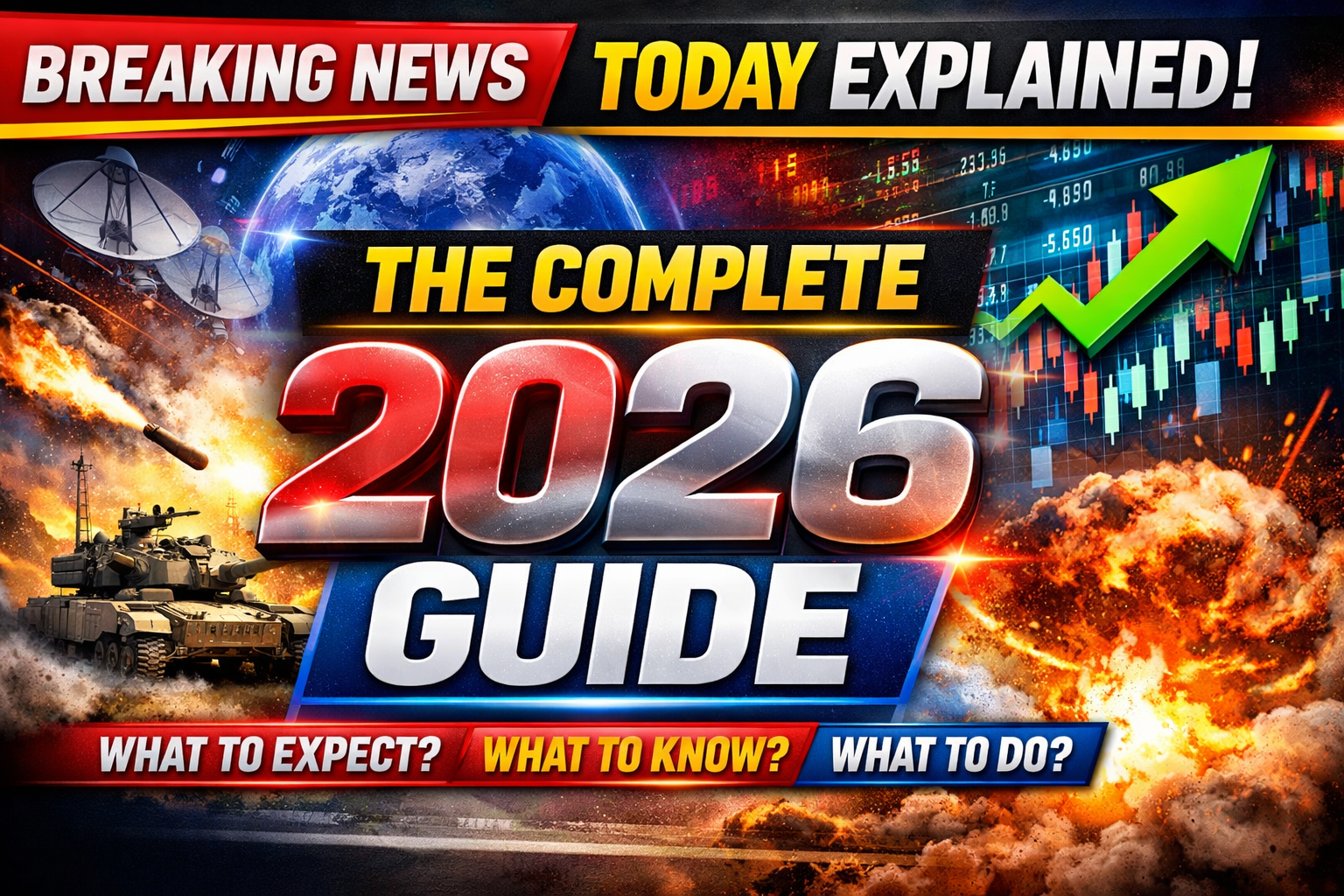
Breaking news arrives faster than ever in 2026 — but speed and accuracy are not the same thing. Understanding how breaking news really works helps you get more genuine information and less anxiety from the stories hitting your feeds every hour.
Breaking News Explained: The First 60 Minutes
The first hour of a breaking news story is the least reliable. Initial reports often contain significant errors because journalists are racing to publish before confirmation. In a major event — a terror attack, a natural disaster, a political assassination — the first accounts typically overstate casualties, misidentify perpetrators, and get key details wrong. The 2013 Boston Marathon bombing saw major outlets incorrectly identify the perpetrators; the 2011 Norway attacks were initially attributed to Islamic extremists before the actual perpetrator emerged.
This pattern repeats so consistently that experienced news consumers have developed a practical rule: wait 24 hours before forming strong conclusions about any breaking story. By then, the most egregious errors have been corrected, context has emerged, and the story has been verified by multiple independent outlets. Understanding how to fact-check news articles is essential during breaking stories when misinformation spreads fastest.
How Breaking News Gets Published So Fast
Modern breaking news operates through a tiered system. Wire services — Associated Press (AP), Reuters, and AFP — maintain reporters worldwide whose sole job is being first to file on major events. Their dispatches reach subscribing outlets simultaneously within seconds. Social media — particularly X (formerly Twitter) and verified government or emergency service accounts — often breaks news before wire services, though with far less verification.
News organisations now monitor social media at dedicated desks, using tools that alert editors when specific keywords trend rapidly. The pressure to publish before competitors creates a “tweet first, verify later” dynamic that produces the errors described above. Understanding the news cycle explains why the same story gets updated dozens of times in the first few hours — each update correcting or adding to the previous version.
Types of Breaking News and How Reliability Differs
Natural disasters: Generally more reliably reported early because the facts (location, scale) can be confirmed through official agencies (USGS for earthquakes, NWS for weather events). Death tolls are frequently revised upward in the days following.
Political events: Election results, leadership changes, and political resignations are typically well-sourced quickly because governments have official announcement channels. Policy announcements require more careful reading — political context and interpretation vary enormously.
Security incidents: The least reliable category in the first hours. Motivations, perpetrators, and casualty figures are all highly uncertain. Official statements are often deliberately incomplete during active incidents. This is where sensationalism is most dangerous and most common.
Economic news: Financial data releases (jobs reports, inflation figures) are the most reliably reported — the numbers are fixed and official. Following stock market news around economic data releases illustrates how reliable facts can still produce wildly different interpretations.
The Best Sources for Breaking News in 2026
raw breaking news speed: AP and Reuters Twitter/X accounts, BBC Breaking News, official government emergency accounts. verified context within hours: BBC World, Reuters, Al Jazeera English, and The Associated Press consistently maintain the highest standards of rapid verification. depth after the initial breaking phase: The Guardian, New York Times, Washington Post, and specialist outlets depending on the story’s subject area.
The best unbiased news sources list helps you build a reading list that gives you multiple perspectives without sacrificing accuracy. For ongoing breaking stories, news apps with notification settings allow you to follow developing events across multiple sources simultaneously.
Frequently Asked Questions
How do I know if a breaking news story is reliable?
Check whether multiple independent outlets are reporting the same facts (not just citing each other). Look for named official sources rather than anonymous ones. Note whether the outlet has a byline and dateline. Be suspicious of stories that align perfectly with a particular political narrative — genuine breaking news is often messy and unclear. Check whether the images or videos being shared match the story’s claimed location and time using reverse image search.
Should I share breaking news stories immediately?
The instinct to share breaking news quickly is understandable but often counterproductive. Sharing unverified information — even with good intentions — amplifies misinformation. A practical approach: wait for confirmation from at least two independent primary sources before sharing. If you do share early,
use qualifying language (“reports suggest,” “unconfirmed”) and update or delete if the information is corrected. The social cost of spreading misinformation significantly outweighs the benefit of being first to share.
Why do news outlets sometimes report different facts about the same event?
Different outlets have different sources, different levels of access, different editorial standards, and different deadlines. In genuine breaking situations, facts are genuinely unknown — different sources provide different information in good faith,
and no single outlet has the complete picture. Media bias also plays a role in what aspects of a story different outlets emphasise, even when core facts are agreed upon. Reading multiple outlets’ coverage of the same breaking story and identifying where they agree versus diverge is one of the most effective news literacy practices available.

The official voice of Insightful Post, providing real-time updates on the stories that shape our world. From breaking global news to essential general reporting, the Admin team is dedicated to delivering accurate, timely, and unbiased information. Our mission is to keep you informed with the facts, ensuring the Insightful Post community never misses a beat in the fast-paced world of news.

7 thoughts on “Breaking News Explained: How Modern News Really Works in 2026”