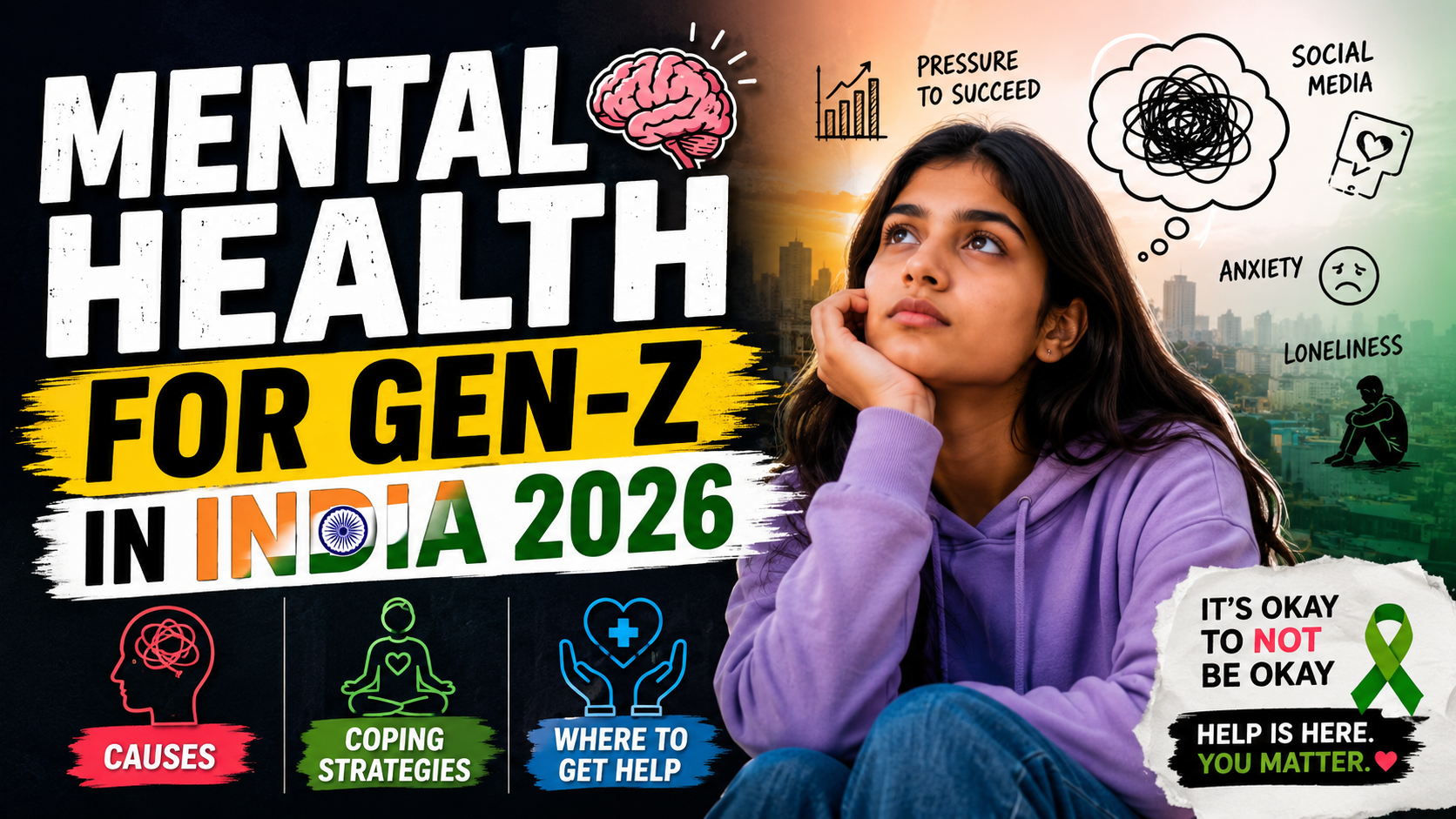
India has 370+ million Gen-Z individuals (born 1997-2012), making it the largest mental health Gen-Z India 2026 in the world. Studies show that:
- 1 in 4 Indian college students reports symptoms of depression
- Anxiety disorders affect 20-25% of young Indians
- India accounts for 36% of global youth suicides
- Only 0.75 psychiatrists per 100,000 people exist in India (vs. 16 in the US)
- Less than 10% of those needing mental health care actually receive it
Why Gen-Z Is Struggling
1. Social Media Pressure
Constant comparison on Instagram, LinkedIn, and YouTube creates unrealistic expectations. The “highlight reel” culture makes everyone feel inadequate. Doom-scrolling damages attention spans and sleep quality.
2. Academic & Career Stress
India’s hyper-competitive education system — from board exams to JEE/NEET to MBA entrances — creates immense pressure. The startup culture also glorifies overwork (“hustle culture”).
3. Financial Anxiety
Rising living costs, student loans, uncertain job markets, and the pressure to “make it” by 25 create constant financial stress.
4. Loneliness & Isolation
Despite being “connected” online, Gen-Z reports higher levels of loneliness than any previous generation. Remote work and digital-first lifestyles have reduced face-to-face social interactions.
5. Information Overload
24/7 news cycles, climate anxiety, AI job replacement fears, and geopolitical tensions create a constant state of low-grade stress.
Coping Strategies That Actually Work
1. Digital Detox
Set screen time limits. Unfollow accounts that trigger comparison. No phone for the first hour after waking up.
2. Physical Exercise
30 minutes of daily movement — walking, yoga, gym, sports — reduces anxiety by 20-30% (proven by research). Exercise is the most underrated mental health intervention.
3. Sleep Hygiene
7-8 hours of consistent sleep. Fixed sleep/wake times. No screens 1 hour before bed. Cool, dark room.
4. Journaling
Writing down thoughts and feelings for 10 minutes daily reduces rumination and anxiety. Use apps like Day One or simple pen-and-paper.
5. Therapy & Counseling
Therapy is not weakness — it’s maintenance for your mind. Online therapy platforms in India include Practo, MindPeers, Amaha, BetterLyf, and iCall.
6. Breathwork & Meditation
5-10 minutes of daily meditation using apps like Headspace, Calm, or the free Insight Timer can significantly reduce stress.
7. Building Real Connections
Join offline communities — book clubs, sports teams, volunteering groups, or co-working spaces. Human connection heals.
Where to Get Help in India
| Resource | Contact |
|---|---|
| iCall (TISS) | 9152987821 |
| Vandrevala Foundation | 1860-2662-345 |
| AASRA | 9820466726 |
| Snehi | 044-24640050 |
| NIMHANS | 080-46110007 |
| Practo (Online) | practo.com |
| Amaha (Online) | amaha.co |
| MindPeers (Online) | mindpeers.co |
For Parents & Friends
If someone you know is struggling:
- Listen without judgment
- Don’t minimize their feelings
- Encourage professional help
- Check in regularly
- Educate yourself about mental health
Conclusion
Mental health is not a luxury — it’s a fundamental right. In 2026, the conversation around mental health in India is finally opening up, but we need more awareness, accessibility, and affordability. If you’re struggling, remember: seeking help is the bravest thing you can do.

The official voice of Insightful Post, providing real-time updates on the stories that shape our world. From breaking global news to essential general reporting, the Admin team is dedicated to delivering accurate, timely, and unbiased information. Our mission is to keep you informed with the facts, ensuring the Insightful Post community never misses a beat in the fast-paced world of news.