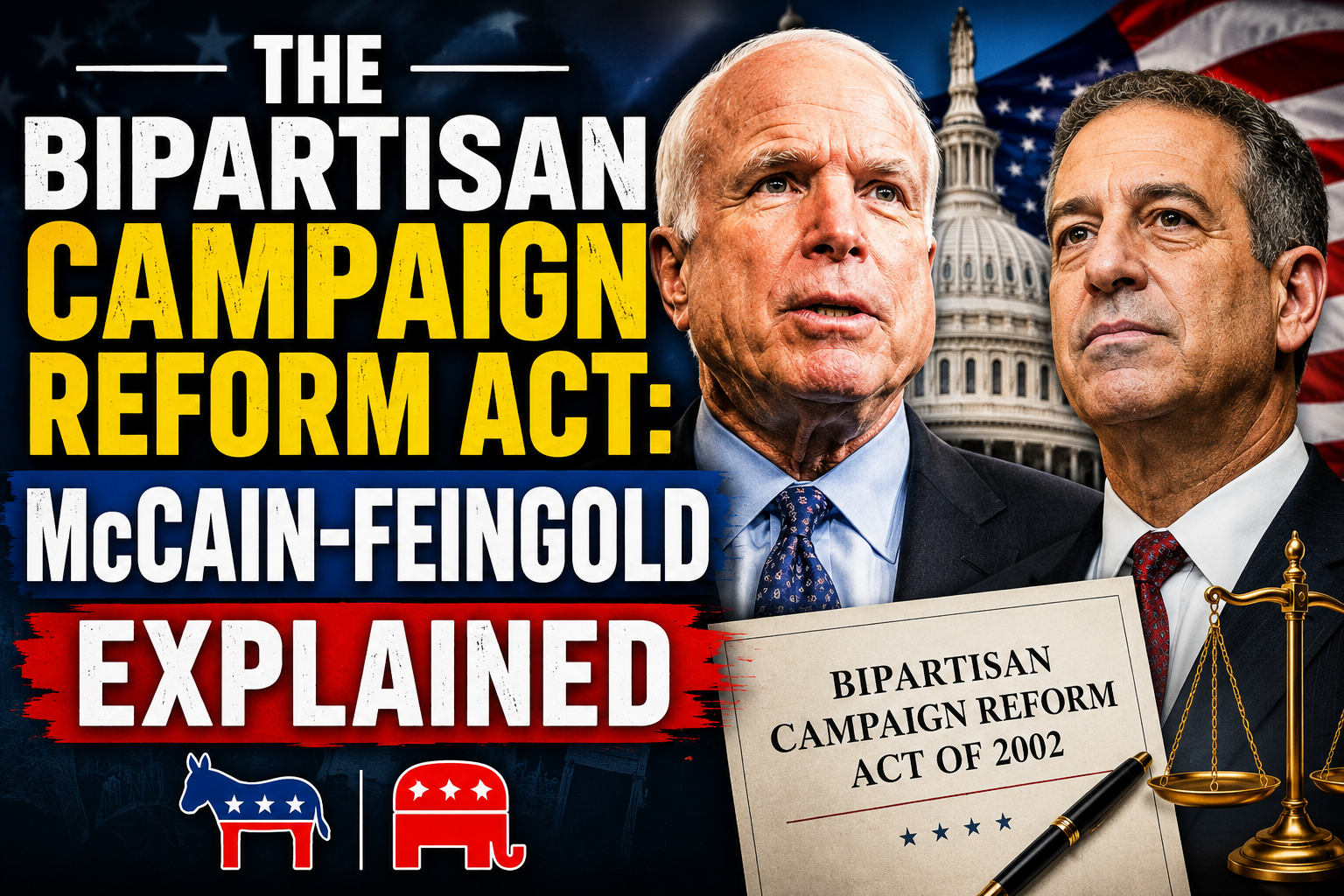
The Bipartisan Campaign Reform Act of 2002 — widely known as McCain-Feingold after its lead sponsors, Senators John McCain and Russ Feingold — was a landmark overhaul of U.S. campaign finance law. Its central goals were to curb the influence of large, unregulated contributions and to increase transparency in political advertising.
Key Provisions
The law’s two headline measures were a ban on “soft money” — unlimited contributions to national party committees — and new restrictions on “issue ads” that named candidates in the weeks before an election. It also raised certain individual contribution limits and strengthened disclosure requirements.
How the Courts Changed It
The Bipartisan Campaign Reform Act has been substantially reshaped by the Supreme Court. The 2010 Citizens United v. FEC decision struck down limits on independent political spending by corporations and unions, opening the door to Super PACs and a surge in outside money. Later rulings further loosened aggregate contribution caps.
Why It Still Matters in 2026
The legacy of McCain-Feingold frames every modern debate over money in politics. With record spending expected across the 2026 midterms, the tension between the law’s original transparency goals and today’s landscape of outside spending remains central to campaign finance reform discussions.
Note: This overview relies on well-established background knowledge about the 2002 law rather than new search results.

The official voice of Insightful Post, providing real-time updates on the stories that shape our world. From breaking global news to essential general reporting, the Admin team is dedicated to delivering accurate, timely, and unbiased information. Our mission is to keep you informed with the facts, ensuring the Insightful Post community never misses a beat in the fast-paced world of news.