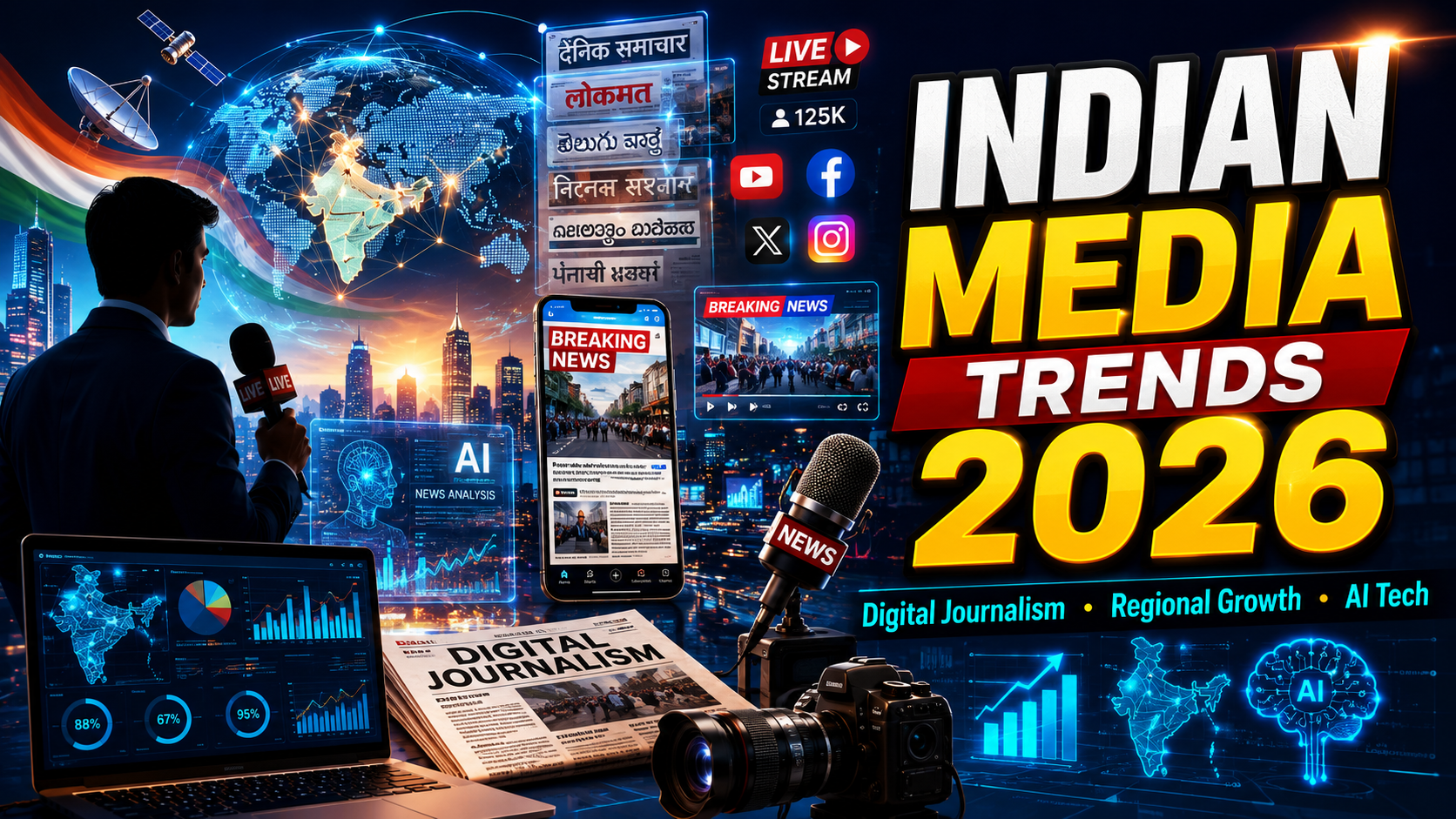
The Indian media trends 2026 are set to redefine how news is produced, distributed, and consumed across the country. With digital platforms gaining even greater dominance and audiences demanding faster, more personalized, and credible information, the media landscape is evolving rapidly. From the rise of AI-powered journalism to the continued expansion of regional and vernacular media, Indian media trends 2026 will be shaped by technology, audience behavior, and major national developments. This article explores the key Indian media trends 2026 in depth, offering insights into the stories, formats, and innovations that will dominate the sector.
Digital Journalism and Real-Time News Delivery
Digital platforms remain the primary driver of Indian media trends 2026. With widespread smartphone usage and affordable internet, readers increasingly prefer instant updates on mobile apps and websites.
AI-Powered Curation and Personalization
News organizations are investing heavily in artificial intelligence to deliver highly personalized content. By 2026, recommendation engines will become significantly more advanced, understanding individual preferences, regional interests, and language choices with greater accuracy. This will help publishers improve engagement and reduce bounce rates.
Fact-Checking and Verification Technologies
Combating misinformation continues to be a top priority. Newsrooms are adopting advanced verification tools and collaborating with independent fact-checkers. Automated systems will become standard practice, enhancing credibility in an era of rapid information flow.
Regional and Vernacular Media Expansion
One of the most significant Indian media trends 2026 is the strong growth of regional and language-based media.
Language-Specific Content Boom
News in Hindi, Tamil, Telugu, Bengali, Marathi, and other regional languages is receiving increased investment. Local stories from smaller towns and rural areas are gaining national visibility through digital platforms.
Hyperlocal Journalism
Hyperlocal reporting on civic issues, local governance, and community events is expected to flourish. This trend empowers citizens with information directly relevant to their daily lives and strengthens grassroots democracy.
Major Political Developments in Coverage
Politics will remain one of the most followed categories under Indian media trends 2026. Several high-stakes events and policy decisions are likely to dominate headlines.
State Elections and Governance Debates
Assembly elections in multiple states will generate intense media coverage. Discussions around welfare schemes, economic performance, and governance will dominate both national and regional outlets.
Legislative Reforms and Policy Analysis
Significant reforms in taxation, labor laws, and digital governance will receive in-depth reporting and analysis. These stories will shape public opinion and influence political discourse nationwide.
Economic and Business News Focus
Economic developments form a core part of Indian media trends 2026. With India maintaining strong growth, business and finance stories will attract substantial readership.
Infrastructure Projects and Investment Announcements
Large-scale infrastructure initiatives, semiconductor plants, and green energy projects will feature prominently. Detailed coverage of government schemes and foreign investments will highlight their impact on employment and regional economies.
Retail Investing and Market Movements
Stories on mutual funds, SIP growth, stock market volatility, and digital banking will remain popular. Special reports on how ordinary citizens are participating in the economy will resonate widely.
Technology-Driven News Formats
Emerging technologies are reshaping how news is produced and consumed as part of Indian media trends 2026.
Short-Form Video and Visual Storytelling
Short news videos on platforms like YouTube Shorts and Instagram Reels are growing rapidly. Visual formats are complementing traditional text-based reporting and attracting younger audiences.
Immersive and Interactive Content
Experiments with augmented reality for data visualization and interactive stories are becoming more mainstream, offering readers engaging ways to understand complex issues.
Social Issues and Human-Interest Reporting
Beyond politics and economy, social and environmental stories will continue to receive strong attention in Indian media trends 2026.
Climate Change and Sustainability Coverage
Environmental stories, including extreme weather events, renewable energy progress, and conservation efforts, will feature regularly. Human-interest angles will add emotional depth to these reports.
Education, Health, and Gender Equality
Ongoing debates around education policy, healthcare access, and women’s empowerment will generate thoughtful journalism. Data-driven stories will help readers understand long-term societal shifts.
Challenges Facing the Indian Media Sector
While opportunities are plentiful, the Indian media trends 2026 must address several challenges.
Combating Fake News and Building Trust
The fight against misinformation requires continuous innovation. Transparent editorial policies and greater accountability will be essential for retaining audience trust.
Sustainable Monetization Models
Digital news organizations will continue experimenting with subscriptions, newsletters, and diversified revenue streams while balancing free access with premium content.
Conclusion: A Dynamic Indian Media Landscape in 2026
The Indian media trends 2026 discussed above highlight a sector that is more digital, regional, and technology-driven than ever before. As major political, economic, and social developments unfold, quality journalism will play a vital role in keeping citizens informed and engaged. Whether through breaking news alerts, in-depth analysis, or regional coverage, the Indian media ecosystem is well-positioned to meet the evolving needs of its audience in the years ahead.

The official voice of Insightful Post, providing real-time updates on the stories that shape our world. From breaking global news to essential general reporting, the Admin team is dedicated to delivering accurate, timely, and unbiased information. Our mission is to keep you informed with the facts, ensuring the Insightful Post community never misses a beat in the fast-paced world of news.