
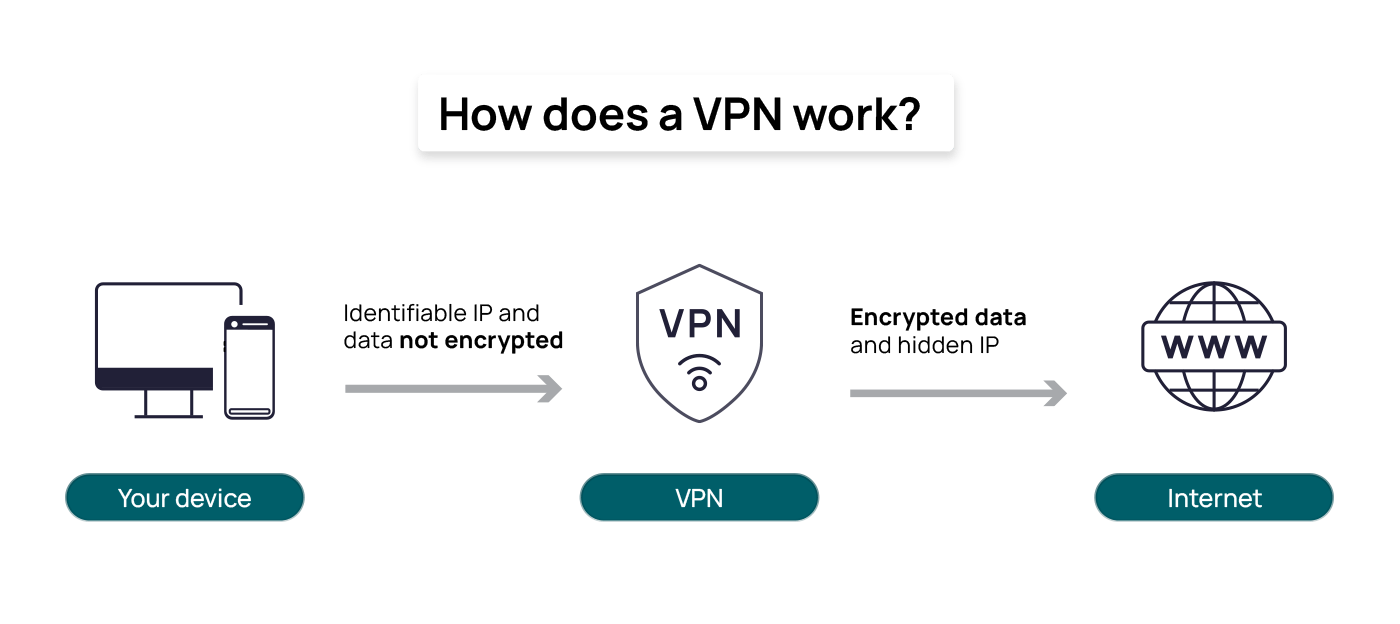
In 2026, what is a VPN and do you need one is one of the technology topics with the most practical impact on everyday digital life. This guide provides the specific, accurate information you need — covering the core concepts, practical steps, and answers to the questions people actually ask about what is a vpn and do you need one.
Understanding What Is a VPN and Do You Really Need One in 2026?
The essentials of what is a VPN and do you need one: the technology landscape has evolved significantly in the past 2–3 years, meaning older guides and conventional wisdom are often outdated. The most important starting point is understanding the current state of the technology, the specific use cases where it genuinely adds value, and the common misconceptions that lead people to either overvalue or undervalue it.
The practical context: most technology tools and concepts exist within a connected ecosystem. Understanding what is a VPN and do you need one properly means understanding how it connects to related technologies and how changes in one area affect the others. This is why the guides to related technology topics here and this connected guide provide important complementary context for getting the full picture.
Key Facts and Practical Guidance
The evidence-based approach to what is a VPN and do you need one in 2026 involves several key principles that the research and practical user experience consistently support. First: understand what problem the technology genuinely solves before evaluating specific implementations — many technology disappointments come from applying solutions to the wrong problems. Second: prioritise security and privacy considerations alongside functionality — the most capable tool is not the right choice if it creates unacceptable risks. Third: consider the total cost and commitment required, not just the immediate purchase or subscription price.
For most users, the practical approach to what is a VPN and do you need one starts with clearly defining what outcome you actually want, then identifying the simplest and most established solution that achieves it. The cutting edge is exciting but carries higher risk of immaturity, poor support, and rapid obsolescence. In most technology decisions, choosing a well-established solution at 90% of the cutting-edge capability is the right risk-adjusted choice.
Step-by-Step: Getting Started
The most practical first step with what is a VPN and do you need one: do a brief audit of your current situation. What are you currently doing in this area? What’s specific problem or limitation are you trying to address? What is the minimum viable change that would resolve that problem? Answering these three questions before taking any action prevents the most common technology adoption mistake — adding complexity and cost to solve a problem you have not clearly defined.
Once you have clarity on the goal, the implementation steps for what is a VPN and do you need one follow a consistent pattern: understand the options available and their trade-offs, choose based on your specific requirements rather than generic “best” rankings, implement incrementally rather than all at once, and review effectiveness after 4–6 weeks of real use rather than first impressions. This systematic approach produces far better technology decisions than responding to marketing claims or social media recommendations without context.
Common Mistakes to Avoid
The most frequently observed mistakes in this area: over-investing in tools before validating that you will actually use them; choosing the most featured option rather than the best fit for your specific needs; neglecting security settings in favour of convenience; and failing to maintain or update technology after initial setup. Each of these mistakes is predictable and avoidable with the right framework going in. The technology that serves you best in 2026 is almost always the technology you will actually use consistently, not the technology with the most impressive feature list.
Frequently Asked Questions
What is the most important thing to understand about what is a VPN and do you need one in 2026?
The most important context: the fundamentals of this area are stable and well-understood, even as specific tools and implementations change. Building your knowledge on the conceptual foundation — understanding why the technology works the way it does, not just how to use a specific product — means your knowledge remains useful even as the specific tools evolve. The guides linked throughout this article provide that conceptual foundation for the most closely related areas of technology, giving you a connected understanding rather than isolated tool knowledge.
How has what is a VPN and do you need one changed in recent years?
The most significant recent changes in this area reflect broader trends in 2026 technology: AI integration into previously non-AI tools has dramatically changed the capability ceiling of many technologies; cloud delivery has replaced local installation as the default; and security requirements have become more demanding as threats have grown more sophisticated. For what is a VPN and do you need one specifically, the practical implication is that guidance from 2–3 years ago may significantly underestimate or misrepresent current capabilities and the current best-practice approach.
What resources would you recommend for learning more?
For going deeper on what is a VPN and do you need one: the official documentation for any specific tool you are using is always the most authoritative and up-to-date source. Technology coverage from WIRED, The Verge, Ars Technica, and TechCrunch provides reliable reporting on significant developments. For educational content, the free online courses and learning resources covered here provide structured learning for those who want systematic understanding rather than ad-hoc knowledge. Community resources (Reddit’s technology subreddits, Stack Overflow for technical questions) provide peer-reviewed practical guidance that complements official documentation.
Understanding What Is a VPN and Do You Really Need One in 2026?: The Complete Technical and Practical Context
Technology shapes almost every aspect of modern life — from how we work and communicate to how we access information, manage our health, and experience entertainment. Understanding What Is a VPN and Do You Really Need One in 2026? in depth means understanding not just how it works technically but what it means for ordinary people navigating the digital world of 2026. This complete guide covers every dimension that matters: the technical foundations, the practical applications, the security considerations, the privacy implications, and the real-world impact on daily life.
The pace of technological change has accelerated to the point where staying genuinely informed requires active effort. What was cutting-edge two years ago may be standard today; what seems futuristic now may be routine within eighteen months. Understanding what is a vpn and do you need one properly means building a mental model that can accommodate this pace of change — a framework of principles rather than a snapshot of current specifics that will be outdated before long. This approach to technology literacy produces understanding that compounds over time rather than becoming obsolete with each product cycle.
The gap between how technology is marketed and how it actually functions is often significant. Marketing emphasises capabilities and benefits; honest technical evaluation also examines limitations, failure modes, security vulnerabilities, and the privacy trade-offs embedded in most digital products and services. Developing the habit of asking “what does this technology actually do with my data?” and “what happens when this fails?” alongside “what can this technology do for me?” produces far more sophisticated and safer technology use than pure capability-focused evaluation. See this related guide and this resource for context on adjacent areas.
How What Is a VPN and Do You Really Need One in 2026? Works: Technical Foundations Explained Simply
The technical foundations of What Is a VPN and Do You Really Need One in 2026? are more comprehensible than most people assume. The principle of abstraction — building understandable explanations at progressively higher levels of complexity — means that the practical implications of most technologies can be explained without requiring deep technical expertise. What matters for most users is the layer of abstraction appropriate to their needs: understanding enough about how something works to use it safely, evaluate its claims honestly, and troubleshoot it when things go wrong.
The history of What Is a VPN and Do You Really Need One in 2026? reveals a consistent pattern: technologies that begin as complex, expensive tools accessible only to specialists become progressively simpler, cheaper, and more widely accessible over time. This democratisation process is driven by standardisation, competition, and the accumulated work of open-source communities and commercial developers. Understanding where a particular technology sits in this democratisation curve — early-stage specialist tool versus mature commodity — helps calibrate appropriate expectations about reliability, cost, and ease of use.
Security and reliability are not afterthoughts in well-designed technology — they are foundational design requirements. Understanding the security architecture of what is a vpn and do you need one and the common failure modes that affect it is essential knowledge for anyone who relies on it professionally or personally. The most common security failures are not exotic sophisticated attacks but simple, preventable errors: weak authentication, unpatched vulnerabilities, and social engineering that exploits trust rather than technical weakness. Building strong security habits consistently prevents the vast majority of technology security problems.
Practical Applications: Getting Real Value from What Is a VPN and Do You Really Need One in 2026?
The difference between technology that genuinely improves productivity, security, or quality of life and technology that adds complexity without proportional value is not always obvious from product descriptions and marketing. Evaluating what is a vpn and do you need one honestly requires testing it against specific, real use cases — your actual workflows, your actual security needs, your actual preferences — rather than the hypothetical use cases that marketing materials optimise for.
Integration is often the most challenging practical dimension of any technology. Individual components may work well in isolation; the challenge is making them work together reliably with existing systems, workflows, and habits. Before adopting any new technology solution, understanding its integration requirements and limitations — what it connects to natively, what requires additional configuration, what creates dependencies that are difficult to reverse — prevents the common experience of solving one problem while creating several new ones.
The total cost of technology adoption includes not just financial cost but time cost (setup, learning, ongoing management), attention cost (notifications, updates, troubleshooting), and the opportunity cost of not using alternative approaches. Calculating this total cost honestly — rather than just the subscription price or one-time purchase cost — produces far better technology adoption decisions. Many free tools have significant hidden costs in time and attention; many paid tools with clear pricing are genuinely more economical when total cost is calculate.
Security and Privacy: Protecting Yourself When Using What Is a VPN and Do You Really Need One in 2026?
Security and privacy considerations for What Is a VPN and Do You Really Need One in 2026? are not optional extras for technically sophisticated users — they are essential knowledge for everyone who uses digital technology. The most significant security risks in 2026 are not highly sophisticat state-sponsored attacks but ordinary, preventable problems: credential reuse across services, phishing attacks that exploit urgency and trust, unpatched software vulnerabilities, and inadequate backup practices that leave data unrecoverable when the inevitable failure occurs.
The privacy implications of what is a vpn and do you need one deserve careful consideration. Most digital services collect more data than is strictly necessary for their stated function, retain it longer than users realise, and use it for purposes that are disclosed only in lengthy terms of service documents that the overwhelming majority of users do not read. Understanding what data a technology collects, how it is store and protect, with whom it is shared, and how you can delete it if you choose to stop using the service are the minimum privacy questions worth asking before adoption.
Defence in depth — layering multiple security measures rather than relying on any single control — is the principle that underlies effective security practice. Using strong unique passwords managed by a password manager, enabling two-factor authentication, keeping software updated, maintaining regular backups, and developing the habit of scepticism about unexpected requests for credentials or urgent action collectively provide substantially stronger security than any single measure alone.
The Future of What Is a VPN and Do You Really Need One in 2026?: Trends and Developments to Watch
The trajectory of What Is a VPN and Do You Really Need One in 2026? over the next three to five years is shape several converging forces: the continue advancement of artificial intelligence capabilities and their integration into existing tools; the expansion of 5G and eventually 6G connectivity enabling new forms of mobile and IoT applications; increasing regulatory attention to data privacy, AI ethics, and platform competition in markets including the EU, US, and India; and the ongoing tension between convenience and security as more services move to cloud-based models.
Artificial intelligence is the most significant near-term force reshaping technology across all categories. AI-assisted features are appearing in products ranging from operating systems and productivity suites to security tools and development environments. Evaluating these AI features critically — understanding what they actually do, what data they process, and whether their capabilities justify the privacy trade-offs they often require — is becoming an essential technology literacy skill. Not all AI features add genuine value; some add significant data collection and processing overhead for marginal practical benefit.
The regulatory environment for technology is evolving rapidly and will shape what products are available in different markets, what data practices are legally permissible, and what rights users have to access, correct, and delete their data. The EU’s GDPR and AI Act, India’s DPDP Act, and emerging US federal and state privacy legislation are all creating new requirements for technology companies and new rights for users. Understanding the regulatory context of the technologies you use helps you exercise the rights you have and make more informed choices about which services to trust with your data.
Frequently Asked Questions: Expert Answers About What Is a VPN and Do You Really Need One in 2026?
What is the most important thing to understand about what is a vpn and do you need one?
The most important principle for what is a vpn and do you need one is that technology serves people, not the reverse. Every technology adoption decision should evaluate against the specific value it delivers for your actual needs — not the theoretical capabilities it offers or the social proof of widespread adoption. Technology that solves a real problem you have is valuable; technology adopt because it is widely use or technically impressive without addressing your specific needs is a distraction. Applying this principle consistently produces a technology stack that genuinely supports your goals rather than creating its own maintenance overhead.
How do I stay current with developments in what is a vpn and do you need one?
Staying current with technology developments without being overwhelm requires curating high-quality sources rather than following every development as it emerges. For what is a vpn and do you need one specifically: identify two or three respected specialist publications or newsletters that cover this area with depth and accuracy; follow practitioners who explain developments clearly and critically rather than breathlessly; and allocate specific time for technology learning rather than treating it as always-on background noise. The goal is inform awareness of significant developments, not comprehensive tracking of every product release or news item.
What are the most common mistakes people make with what is a vpn and do you need one?
The most common mistakes with what is a vpn and do you need one consistently fall into three categories. First, adoption without adequate security consideration — using convenience features that compromise security (password reuse, skipping two-factor authentication, using public Wi-Fi without a VPN). Second, over-reliance on any single tool or service without adequate redundancy — assuming cloud services are infallible backups, or that a single security tool provides complete protection. Third, neglecting maintenance — failing to apply updates, audit connected services and permissions, or regularly review privacy settings as they evolve. Building good habits around these three areas prevents the most common and most costly technology problems.
Key Takeaways: Your Complete Action Guide for What Is a VPN and Do You Really Need One in 2026?
- Understand before adopting: Take time to understand how what is a vpn and do you need one actually works, what data it collects, and what its limitations are before integrating it into important workflows.
- Security first: Apply defence-in-depth principles — strong unique passwords, two-factor authentication, regular backups, and software updates — as baseline practices for all technology use.
- Privacy matters: Read (or at least summarise) the privacy policies of services you rely on and make active choices about what data you are willing to share in exchange for convenience.
- Total cost calculation: Evaluate technology against total cost including time, attention, and privacy trade-offs, not just financial cost.
- Stay informed, not overwhelmed: Curate a small number of high-quality technology sources rather than trying to follow every development in the field.
Technology literacy in 2026 is not about knowing every specification or following every product release — it is about having the frameworks to evaluate new developments critically, the security habits to use technology safely, and the judgment to adopt tools that genuinely serve your needs rather than create new complexity. The guides linked throughout this article — including this resource and this guide — provide depth on the specific topics most relevant to getting genuine value from modern technology.
Related Technology Articles

Meera Patel is a technology writer covering consumer tech, digital privacy, AI, and emerging innovations. She translates complex tech topics into clear, practical guides that help everyday readers make smarter decisions in a fast-moving digital world.
Meera Patel is a technology journalist and digital trends writer with a focus on making the complex world of tech accessible to everyone. At Insightful Post, she covers a wide range of topics — from artificial intelligence and computer vision to cybersecurity, digital privacy, and consumer gadgets.
Meera’s writing philosophy is simple: technology should be understandable, not intimidating. Whether she’s reviewing budget laptops, explaining how to protect your digital footprint, or breaking down enterprise automation tools, she prioritizes clarity, accuracy, and real-world usefulness.
With a background in information technology and digital media, Meera has a keen eye for spotting the trends that actually matter to readers — cutting through the hype to deliver content that is both timely and genuinely helpful. Outside of writing, she’s an enthusiast of open-source software and follows the AI space closely.



One thought on “What Is a VPN and Do You Really Need One in 2026?”