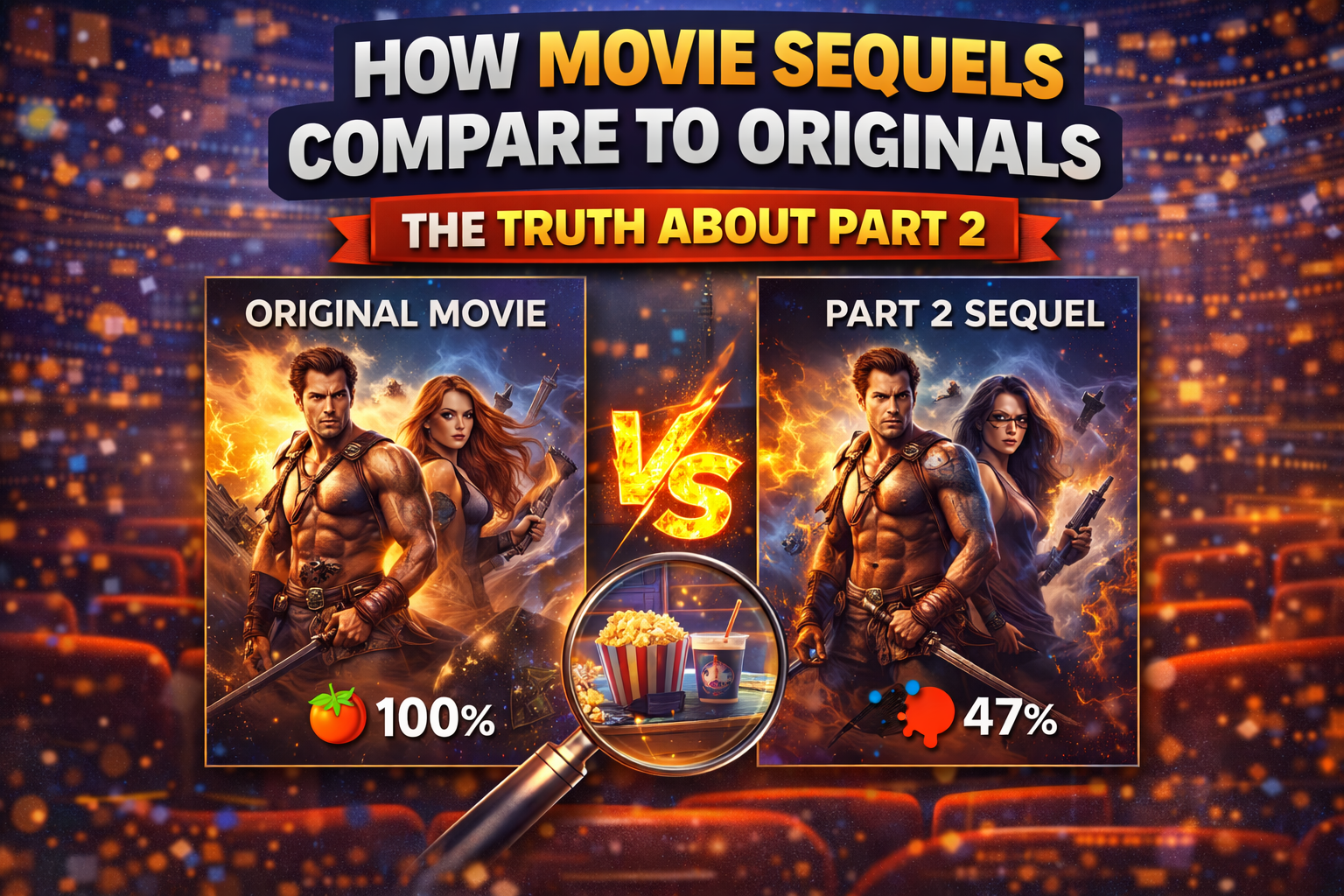
How Movie Sequels Compare to Originals, The sequel problem is one of cinema’s most persistent creative challenges. The commercial logic of following successful films with continuations is irresistible to studios, but the creative logic is far more complicated. Sequels begin with significant advantages and face significant handicaps compared to their predecessors, and understanding these dynamics explains why most sequels disappoint while a handful genuinely excel.
Why Most Sequels Disappoint
The fundamental problem with most sequels is that the original film’s story was complete. Its characters had journeys with meaningful conclusions; its world was introduced with the freshness of first encounter; its surprises could only surprise once. A sequel must find new stories for characters whose defining stories have been told, in worlds the audience already knows, generating surprises for viewers who are now expecting them.
Sequels That Surpassed Their Originals
The rare exceptions to the sequel disappointment pattern are genuinely illuminating. The Godfather Part II is the most celebrated example — a sequel that many critics consider superior to the original by deepening the themes and expanding the scope of the story in ways that retroactively enriched the first film. The Empire Strikes Back, Aliens, and Terminator 2 all achieved the difficult feat of honoring their originals while finding genuine new territory to explore.
What Makes a Sequel Work
Successful sequels typically share several characteristics. They’ve genuine narrative necessity — the story actually needed more telling. They find new perspectives or problems for established characters rather than repeating the original’s conflicts at larger scale. They bring creative ambition to the continuation rather than treating it as purely commercial exercise. And they respect what made the original work while being willing to evolve it.
Frequently Asked Questions
Why do studios keep making sequels despite their reputation?
Sequels have significantly lower marketing costs than original films because audience awareness of the franchise already exists. They have more predictable opening weekend performance, making financial planning easier. They tend to underperform relative to originals but still generate significant profit due to lower breakeven thresholds. The commercial risk is genuinely lower even when the critical and audience reception is weaker.
Is there a pattern to how long after the original sequels are successful?
Sequels made quickly after successful originals — within two to three years — tend to perform better than those made after extended gaps, as they can capitalize on built audience enthusiasm and retain the creative team’s momentum. Very long gap sequels face the challenge of reuniting audiences with older versions of beloved characters without generating disappointment or nostalgia fatigue.
Do audiences rate sequels lower than originals on average?
Yes, on average. Aggregate review data consistently shows sequels scoring lower than their originals in both critic and audience ratings. However, the distribution matters — the minority of sequels that succeed tend to be celebrated as particularly remarkable precisely because they overcome the inherent disadvantages of the form, giving them a kind of underdog narrative that elevates their cultural status How Movie Sequels Compare to Originals.
The fundamental problem with most sequels is that the original film’s story was complete. Its characters had journeys with meaningful conclusions; its world was introduced with the freshness of first encounter.
How Movie Sequels Compare to Originals, The sequel problem is one of cinema’s most persistent creative challenges. The commercial logic of following successful films with continuations is irresistible to studios, but the creative logic is far more complicated.
The fundamental problem with most sequels is that the original film’s story was complete. Its characters had journeys with meaningful conclusions;
Related Articles You May Enjoy
- Best Movies to Watch on Netflix in 2026
- Upcoming Movies Releasing This Month
- Best True Crime Podcasts 2026
Understanding How Movie Sequels Compare to Originals: Complete Context and Cultural Significance
Entertainment is never merely passive consumption — it is an active dialogue between creators and audiences, between individual experience and collective meaning. Understanding How Movie Sequels Compare to Originals in depth requires recognising both the immediate pleasures it offers and the broader cultural conversations it participates in. The best entertainment works at multiple levels simultaneously: it entertains, it illuminates, it challenges, and it connects audiences to something larger than their individual experience.
The cultural significance of entertainment in 2026 extends well beyond leisure. The stories we tell — in films, music, television, books, and live performance — shape how we understand ourselves, our societies, and our possibilities. Entertainment that engages with how movie sequels compare to originals thoughtfully contributes to public conversation, builds empathy across differences, and creates the shared cultural references that constitute community identity. This is not a grandiose claim — it is a description of what decades of research on narrative, music, and performance consistently demonstrates about how storytelling shapes human cognition and social bonds.
The economic dimensions of How Movie Sequels Compare to Originals are equally significant. The global entertainment industry generates hundreds of billions of dollars annually, employs millions of people across creative, technical, and commercial roles, and drives significant technological innovation. Understanding the economic structures that shape entertainment production and distribution helps you as a consumer make more intentional choices — supporting independent creators, understanding what your subscription fees actually fund, recognising the commercial pressures that shape content decisions, and identifying the platforms and channels that best align with your values as an audience member.
How to Discover the Best How Movie Sequels Compare to Originals: A Practical Framework
Discovery is the central challenge of entertainment consumption in 2026. The abundance of quality content available across all entertainment formats means that the bottleneck is no longer access but navigation. Developing an effective personal discovery framework for How Movie Sequels Compare to Originals produces dramatically better entertainment satisfaction than relying on platform algorithms or scrolling indefinitely without committing to anything.
The most reliable discovery method for any entertainment format is trusted human recommendation — people whose taste you have calibrated through experience. This means actively building relationships with critics, friends, colleagues, and community members whose recommendations have served you well. When someone whose taste overlaps with but sometimes challenges yours recommends something in the context of how movie sequels compare to originals, that signal deserves significant weight regardless of whether it aligns with what the algorithm is currently surfacing.
Specialist publications and communities provide the next tier of discovery. Genre-specific publications, fan communities, and specialist newsletters cultivate deeper knowledge in specific areas of entertainment than general coverage ever can. If your interest in how movie sequels compare to originals goes beyond casual consumption, finding the specialist community around it connects you to the most knowledgeable and passionate audience members — and their recommendations and discussions are frequently more valuable than mainstream coverage. See this related guide and this complementary resource for specific discovery recommendations in adjacent areas.
Algorithmic recommendations from streaming platforms are a starting point, not a complete discovery strategy. The algorithm is optimised for engagement, not for the best possible match between you and the content — and it has no way of knowing what you would enjoy if you encountered it, only what similar users have engaged with. Treating algorithmic suggestions as input to be evaluated critically rather than as authoritative recommendations produces significantly better discovery outcomes over time.
The Global Perspective on How Movie Sequels Compare to Originals
One of the most significant shifts in entertainment consumption over the past decade has been the genuine globalisation of audiences. Streaming platforms have made content from around the world accessible to anyone with an internet connection, and audiences have responded enthusiastically — South Korean drama, Japanese animation, Spanish thriller series, Indian cinema, Brazilian music, and Nordic noir have all found massive global audiences that would have been impossible to reach before digital distribution made geographic boundaries irrelevant.
This globalisation has enriched How Movie Sequels Compare to Originals in measurable ways. Exposure to entertainment from different cultural contexts expands the range of storytelling approaches, aesthetic traditions, and human experiences that audiences encounter. The popularity of K-drama globally, for example, introduced millions of Western viewers to narrative structures and emotional registers quite different from Hollywood conventions — and many found the experience deeply rewarding precisely because of its difference from what they already knew. The same dynamic applies across entertainment formats: international music, world cinema, translated literature, and global gaming all offer perspectives unavailable within any single cultural tradition.
The challenges of globalised entertainment deserve acknowledgment alongside the benefits. Translation and cultural mediation involve real losses and additions — something always changes when content crosses cultural contexts. There is a risk of cultural appropriation and flattening when global platforms reshape content to fit dominant market preferences. And questions remain about whose stories get amplified versus which cultural productions remain locally contained. Engaging with international entertainment perspectives consciously — seeking content that represents genuinely unfamiliar experiences rather than globalised content pre-filtered for mainstream palatability — produces the richest and most enriching discoveries.
Building Your Personal Entertainment Practice
The most satisfied entertainment consumers are those who have developed deliberate practices around how they engage with How Movie Sequels Compare to Originals — practices that match their available time, their interests, and their broader life priorities. Rather than treating entertainment as whatever is available when you have a free moment, building intentional habits around how movie sequels compare to originals produces more satisfaction, less guilt about time spent, and better discovery outcomes across the board.
Time allocation is the foundation of a sustainable entertainment practice. Most people significantly underestimate how much time they spend on entertainment and significantly overestimate how satisfied they are with that time when it is consumed passively. Dedicating specific time blocks to how movie sequels compare to originals — rather than fitting it around the edges of other commitments — tends to produce more attentive, enjoyable experiences. Equally important is distinguishing between entertainment that actively engages you and entertainment that you consume passively as background to other activities: both are legitimate, but treating passive consumption as equivalent to active engagement consistently leads to dissatisfaction.
Maintaining a record — a watchlist, reading list, listening queue, or event calendar — transforms entertainment discovery from a reactive activity into a proactive one. When you encounter a recommendation from a trusted source, add it to the list immediately rather than trusting memory. When choosing what to engage with next, consult the list rather than browsing platforms in search of inspiration. This simple practice dramatically improves the quality of entertainment experiences while reducing the decision fatigue that leads to scrolling for 30 minutes and then watching something mediocre that the algorithm surfaced.
Expert Critical Perspectives on How Movie Sequels Compare to Originals
The critical conversation around How Movie Sequels Compare to Originals provides a layer of understanding that individual experience alone cannot generate. Critics who have engaged deeply with hundreds or thousands of works in a genre or format develop pattern recognition, historical context, and evaluative frameworks that enrich their own experience — and can enrich yours when you engage seriously with their writing, podcasting, or video essays.
The best criticism is not a simple recommendation of what to engage with or avoid — it is an articulation of what a work is trying to do and how well it succeeds, an identification of what makes it distinctive or conventional, and a contextualisation within the tradition it is working within or against. Reading this kind of criticism before and after engaging with entertainment significantly deepens the experience — not because you need a critic’s permission to enjoy something, but because the additional dimensions of understanding make the same work more interesting and more rewarding.
Industry professionals — directors, writers, musicians, actors, producers, and behind-the-scenes practitioners who speak publicly about their practice — offer a different kind of insight entirely. Understanding the creative decisions, constraints, and intentions behind a work changes how you receive it. A director who explains that a particular visual choice was intended to create a specific emotional effect, a musician who describes the conceptual framework of an album, or a writer who discusses the research and personal experience behind their work all provide context that transforms the experience from consumption of an object into participation in a conversation.
The Technology Landscape Transforming How Movie Sequels Compare to Originals in 2026
Technology has transformed How Movie Sequels Compare to Originals more fundamentally in the past decade than in any previous comparable period. Streaming platforms have displaced physical media and linear broadcast television as the primary distribution mechanism for filmed entertainment. Digital distribution has democratised music publishing while simultaneously concentrating streaming revenues among a small number of dominant platforms. E-books and audiobooks have expand the reading ecosystem while changing how books are discover and consumed. Live entertainment has integrated digital elements — from AR-enhanced concerts to interactive streaming performances — that blur the boundaries between physical presence and digital participation.
Artificial intelligence is beginning to affect entertainment production, discovery, and consumption in ways that will accelerate through the remainder of the decade. AI-assisted visual effects and post-production are already standard at mid-budget film levels. AI music production tools are creating new debates about authorship and copyright that the industry is still working through. AI-powered recommendation algorithms are increasingly sophisticated — and increasingly opaque — in how they shape what audiences discover and what they never encounter. Understanding these technological forces helps you navigate the entertainment landscape more intentionally rather than simply being swept along by algorithmic currents.
The social dimension of entertainment technology — fandom platforms, community discussion spaces, creator economies, live streaming — has created new forms of entertainment engagement that were unavailable even a decade ago. The relationship between creators and audiences has become more direct, more interactive, and more economically complex than the traditional model of passive consumption from distant cultural producers. This transformation affects everything from how films market themselves to how independent musicians build sustainable careers, and it creates new opportunities for audience members to support the creators they value most directly.
Frequently Asked Questions: Complete Expert Answers on How Movie Sequels Compare to Originals
What makes how movie sequels compare to originals worth investing time in?
The best how movie sequels compare to originals in 2026 combines accessibility with genuine quality — content that rewards attention, rewards repeat engagement, and adds something meaningful to your understanding of the world or your appreciation of storytelling craft. The test of truly excellent entertainment is not just immediate enjoyment but lasting impact: does it change how you think, what you feel, or what you notice about the world? Content that meets this standard is worth considerable time and attention; content that merely passes the time pleasantly is also legitimate entertainment, but should not crowd out genuinely enriching material in a balanced entertainment diet.
How do I avoid entertainment decision fatigue with How Movie Sequels Compare to Originals?
Decision fatigue in entertainment consumption is solve systems, not willpower. Build and maintain a watchlist or reading list from trusted recommendation sources so you always have pre-selected options ready. Commit to finishing content before sampling the next thing — partial viewing or reading rarely satisfies and accumulates a backlog of unfinished experiences that produces guilt rather than enjoyment. Designate specific entertainment time rather than fitting it around other activities — the quality of attention you bring significantly affects how much you get from the experience. And periodically revisit acknowledged classics rather than always chasing new releases — the best work from previous decades is often more rewarding than recent releases competing for immediate attention.
What is the future of How Movie Sequels Compare to Originals?
The trajectory of How Movie Sequels Compare to Originals over the next few years will shape three major forces: the continue maturation of streaming economics (expect consolidation, price increases, and more hybrid release strategies as platforms seek profitability); the integration of AI tools into production and discovery (with significant ongoing debates about copyright, authorship, and what constitutes genuine creativity); and the evolution of creator economies (enabling more direct relationships between creators and audiences, disrupting traditional gatekeeping structures that have historically control who gets heard). Understanding these macro trends provides context for the specific developments you will encounter in entertainment news over coming years and helps you make more informed choices about how you engage with the landscape.
Key Takeaways: Your Complete Action Plan for How Movie Sequels Compare to Originals
- Curate your discovery sources: Develop trusted critics and recommendation networks rather than relying solely on algorithmic platforms.
- Engage actively: The most enriching entertainment experiences come from active rather than passive consumption — bringing genuine attention and curiosity to what you watch, read, and listen to.
- Build community: Share entertainment experiences with others — the social dimension amplifies enjoyment and creates lasting shared references that enrich relationships.
- Value depth over breadth: Finishing fewer things with full attention produces more satisfaction than sampling many things superficially.
- Explore the global landscape: The most rewarding discoveries often come from outside the dominant cultural tradition — seek out international and independent content deliberately.
Entertainment at its best is not passive consumption but active engagement with the human capacity for storytelling, creativity, and meaning-making. How Movie Sequels Compare to Originals in 2026 offers an extraordinary range of opportunities for that engagement — the challenge and the pleasure is navigating it with intention, curiosity, and a genuine commitment to quality over quantity. Explore our full range of entertainment guides at this related article and this complementary resource for the complete picture of what is available.
Related Entertainment Articles
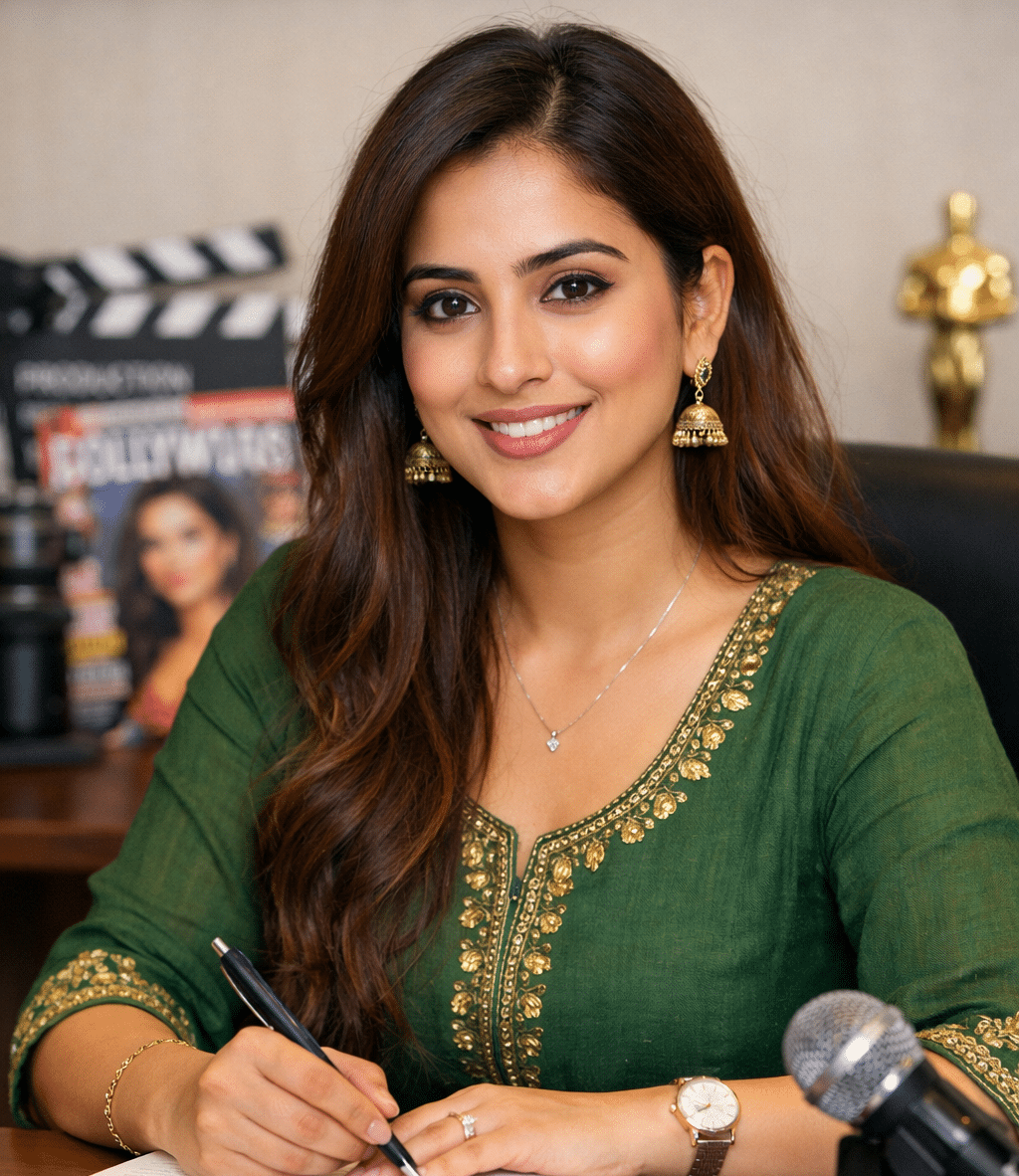
Ritika Sharma is a lead Entertainment writer at Insightful Post, where she tracks the latest shifts in global cinema, streaming trends, and celebrity news. With a passion for storytelling both on and off the screen, Ritika provides sharp commentary on everything from red-carpet highlights to the business of Hollywood.
Ritika Sharma is a dedicated entertainment journalist and cultural critic with a deep passion for the art of storytelling — across film, television, music, and digital media. At Insightful Post, she covers the full spectrum of entertainment: from the craft behind Hollywood productions to the cultural impact of global streaming trends.
Ritika brings an analytical yet accessible voice to her writing, helping readers understand not just what is happening in entertainment, but why it matters. Her areas of focus include film scoring, fan culture, classic cinema, and the evolving landscape of TV writing.
With a background in media and communications, Ritika believes great entertainment journalism should be both informative and genuinely enjoyable to read. When she’s not writing, she’s rewatching classic films or deep-diving into the latest prestige TV series.