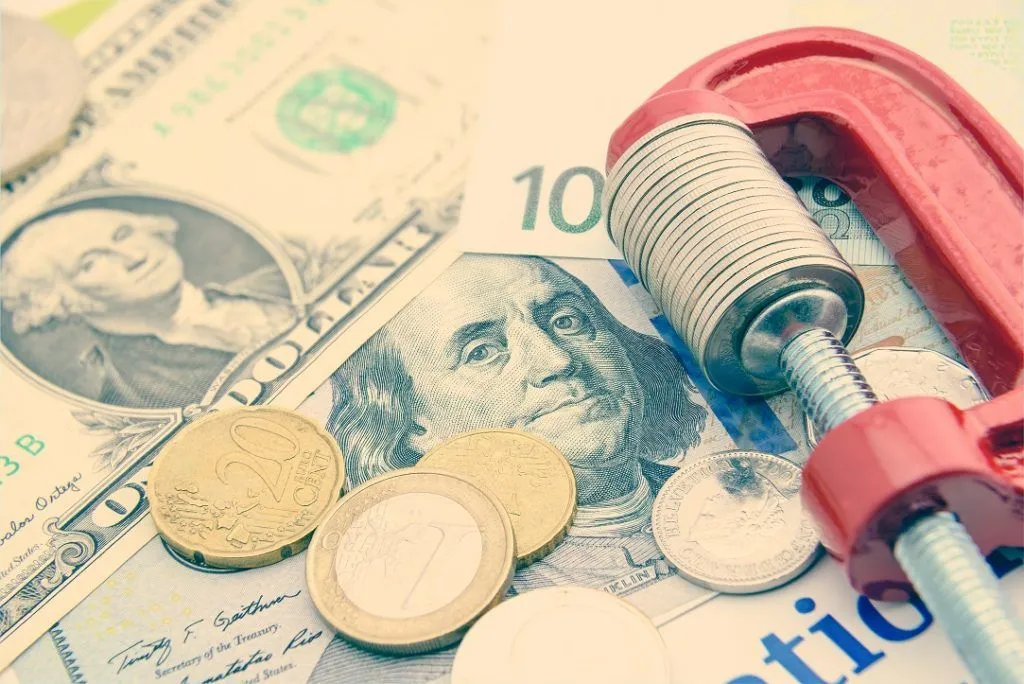
A stock market crash is a rapid, severe decline in equity market prices — typically defined as a fall of 20% or more over a short period, often within days or weeks. Understanding the history of major market crashes, what caused them, and how they were resolved provides essential context for following financial news and maintaining perspective during periods of market volatility.
The 1929 Great Crash and the Great Depression
The most catastrophic market crash in US history began in September 1929 and reached its devastating nadir in 1932. The Dow Jones Industrial Average fell approximately 89% from its September 1929 peak to its July 1932 low — and did not return to its pre-crash level until 1954. The crash triggered the Great Depression: bank failures, mass unemployment (reaching 25%), deflation, and an economic contraction that lasted nearly a decade.
The 1929 crash resulted from multiple factors: excessive stock market speculation funded by margin loans (allowing investors to buy stocks with only 10% cash), overvalued markets, weak banking regulation, and economic fragility following World War I. The crash destroyed wealth, triggered bank failures (over 9,000 US banks failed between 1930-1933), and collapsed consumer spending in a self-reinforcing spiral. The policy response — austerity under Hoover, then New Deal stimulus under Roosevelt — remains studied by economists as one of the most consequential economic policy experiments in history.
Black Monday: October 19, 1987
The single largest one-day percentage decline in the Dow Jones Industrial Average’s history occurred on October 19, 1987, when the index fell 22.6% in a single day. Unlike 1929, this crash did not trigger a broader economic depression. The Federal Reserve responded quickly, providing liquidity to markets, and the economy continued expanding. The crash was primarily driven by “portfolio insurance” strategies that automatically sold futures as prices fell, creating a feedback loop, and by valuations that had become stretched after a long bull run.
Black Monday prompted significant reforms: circuit breakers that halt trading if prices fall too fast, improved communication between exchanges, and greater attention to market microstructure. The rapid recovery illustrated that not all severe market declines lead to economic crises — the real-economy impact depends on whether the market decline damages the financial system and triggers credit contractions.
The 2000-2002 Dot-Com Crash
The bursting of the technology and internet stock bubble produced one of the most devastating sector-specific crashes in history. The NASDAQ Composite, heavily weighted toward technology companies, peaked in March 2000 at 5,048 and fell to 1,114 by October 2002 — a decline of 78%. Many prominent dot-com companies — Pets.com, Webvan, Boo.com — went bankrupt entirely. The broader S&P 500 fell approximately 49%.
The crash resulted from extreme overvaluation: companies with no revenues, no profits, and speculative business models had reached multi-billion-dollar market capitalisations on the expectation of future internet dominance. Many legitimate technology companies (Amazon, Apple, Google in its early days) also saw share prices fall dramatically before eventually recovering and building genuinely extraordinary businesses. The lesson: market prices can disconnect substantially from fundamental value during periods of speculative excess, and corrections — however painful — eventually occur.
The 2008 Financial Crisis and Market Crash
The S&P 500 fell approximately 57% from its October 2007 peak to its March 2009 trough in the most economically damaging crash since 1929. Unlike 1929, however, this crash was accompanied by a recession rather than a depression — largely because of the aggressive policy response. The Federal Reserve cut interest rates to near-zero, deployed emergency lending facilities to prevent financial system collapse, and eventually launched quantitative easing. The federal government enacted a $700 billion financial sector bailout (TARP) and an $800 billion stimulus package.
The crash was triggered by the collapse of the US housing market and the complex financial instruments (mortgage-backed securities, collateralised debt obligations) built upon it. When housing prices fell and subprime mortgage defaults spiked, the financial instruments referencing them lost value, triggering losses at financial institutions globally. The interconnection of the global financial system meant that a US housing problem became a global financial crisis almost immediately. The connection between this crash and the broader 2008-2009 recession illustrates how financial market crashes can cause severe real-economy damage when they trigger credit crunches.
The 2020 COVID Crash and Recovery
The fastest market crash and the fastest recovery in recorded history occurred in 2020. The S&P 500 fell 34% in just 23 trading days from February 19 to March 23, 2020, as COVID-19 lockdowns forced economic shutdowns globally. Then, supported by extraordinary fiscal stimulus ($5 trillion over two years) and the Fed’s unlimited QE commitment, the market recovered all losses and reached new all-time highs by August 2020 — just five months after the low.
The 2022 Bear Market
Rising interest rates — the Federal Reserve’s aggressive response to 40-year high inflation — drove a more gradual bear market in 2022, with the S&P 500 falling approximately 25% from January to October 2022. This crash was distinctive in affecting bonds as severely as equities — both fell simultaneously, unlike most previous bear markets where bonds provided portfolio cushioning. Understanding what distinguishes bear markets from brief corrections helps contextualise 2022’s significance.
Frequently Asked Questions
What is the difference between a market crash and a recession?
A market crash is a rapid decline in financial asset prices; a recession is a sustained decline in economic output. The two are related but not identical. Some crashes lead to recessions (1929, 2008); others do not (1987). Some recessions are accompanied by severe market crashes; others (mild slowdowns) produce more moderate market corrections. The key transmission mechanism: when a market crash damages financial institutions or destroys enough household wealth to significantly reduce consumer spending, it can trigger or deepen a recession. When a crash is primarily confined to financial markets without these broader spillovers, the economic damage is more limited.
How should individual investors respond to market crashes?
Educational context only — not investment advice. Financial research consistently shows that investors who sell during market crashes and miss the recovery tend to achieve worse long-term outcomes than those who hold diversified portfolios through the volatility. The best days in markets tend to cluster with the worst days — missing a handful of the best trading days significantly impairs long-run returns. For most long-term investors, maintaining a diversified portfolio appropriate to their risk tolerance and rebalancing systematically is more evidence-supported than attempting to time market bottoms and recoveries. Consult a qualified financial advisor for guidance specific to your situation.
Final Thoughts
Every major stock market crash in history has been followed by recovery, though the timing, length, and economic damage of the intervening period has varied enormously. Understanding the history of crashes — their causes, mechanisms, policy responses, and eventual resolution — provides essential perspective for maintaining rational investment behaviour during periods of market volatility. For related reading, explore bear and bull markets in detail, how the stock market affects the broader economy, and the bond market signals that often precede market turning points.

Arav Deshmukh is a seasoned financial journalist and lead contributor to the Economy News Writer section at Insightful Post. Specializing in the complexities of the Forex market and global investment strategies, Arav provides deep-dive analysis into fiscal policy and market shifts. His mission is to bridge the gap between high-level economic data and actionable business intelligence for modern investors.
Aarav Deshmukh is an economics journalist and financial writer with a broad expertise spanning financial markets, fiscal policy, business & startups, and geopolitics. At Insightful Post, he covers the economic stories that matter most — from inflation and market volatility to the policy decisions reshaping industries and the startup ecosystems disrupting traditional business.
What makes Aarav’s writing distinctive is his ability to connect the dots between politics, policy, and money. He understands that economic events rarely happen in isolation — a central bank decision in Washington ripples into markets in Mumbai; a geopolitical conflict reshapes global supply chains overnight. Aarav gives readers the full picture, not just the headline number.
His areas of deep focus include macroeconomic trends, equity and commodity markets, government fiscal strategy, entrepreneurship and venture capital, and the geopolitical rivalries that are redrawing the global economic map. He pays particular attention to India’s emergence as a major economic force and the opportunities and challenges that come with rapid growth.
With a strong academic grounding in economics and finance, Aarav brings both analytical rigor and journalistic accessibility to every article. He believes the best economic journalism doesn’t just explain what is happening — it tells you why it matters to your business, your savings, and your future. Outside of writing, he closely tracks global markets, follows geopolitical developments, and is an avid reader of economic history.