Interest rates are the most powerful lever in modern economic management. When central banks raise or lower interest rates, they set in motion a chain of effects that flows through mortgages, business investment, savings accounts, currency values, and ultimately employment and growth. Understanding how interest rates affect the economy makes economic news dramatically easier to interpret.
What Interest Rates Are and Who Sets Them
An interest rate is the cost of borrowing money, expressed as a percentage of the amount borrowed per year. The most important interest rate in any economy is set by the central bank — the Federal Reserve in the United States, the European Central Bank in the Eurozone, and the Bank of England in the UK.
Central banks set a benchmark “policy rate” — in the US, the federal funds rate — which is the rate at which banks lend money to each other overnight. This rate cascades through the entire economy: it influences mortgage rates, car loan rates, credit card rates, business borrowing rates, and savings account rates, though not with perfect one-to-one transmission.
How Rising Interest Rates Affect the Economy
When central banks raise interest rates, as the Federal Reserve did aggressively from March 2022 to July 2023 (raising from near-zero to 5.25-5.5%), the effects flow through multiple channels simultaneously.
Mortgages become more expensive. The average 30-year fixed mortgage rate in the US rose from 3.1% in late 2021 to above 7% by late 2023. For a $400,000 mortgage, this more than doubled the monthly payment — from approximately $1,706 to $2,661. This effectively priced millions of potential homebuyers out of the market and reduced housing market activity significantly. The connection between interest rates and rising rent prices reflects this dynamic: when buying becomes unaffordable, rental demand rises.
Business investment falls. When borrowing costs rise, the financial hurdle for new investment projects increases. Businesses are less likely to take on debt to expand capacity, hire additional workers, or invest in new equipment when interest payments consume a larger portion of projected returns. This is why rate hikes tend to slow hiring and capital expenditure.
Consumer borrowing becomes more expensive. Credit card rates, car loans, and personal loans all rise with the policy rate, reducing consumer purchasing power and constraining spending on large-ticket items.
Savings rates improve. Higher policy rates mean higher returns on savings accounts, money market funds, and government bonds. This incentivises saving over spending, which further cools demand — the intended effect when fighting inflation.
How Falling Interest Rates Affect the Economy
The reverse logic applies when central banks cut rates. Lower borrowing costs stimulate demand: mortgages become more affordable, businesses face lower hurdles for investment, and consumers can borrow more cheaply. This is why central banks cut rates during recessions — the Federal Reserve cut to near-zero during both the 2008-2009 recession and the 2020 COVID-19 shock, using extraordinarily low rates to stimulate recovery.
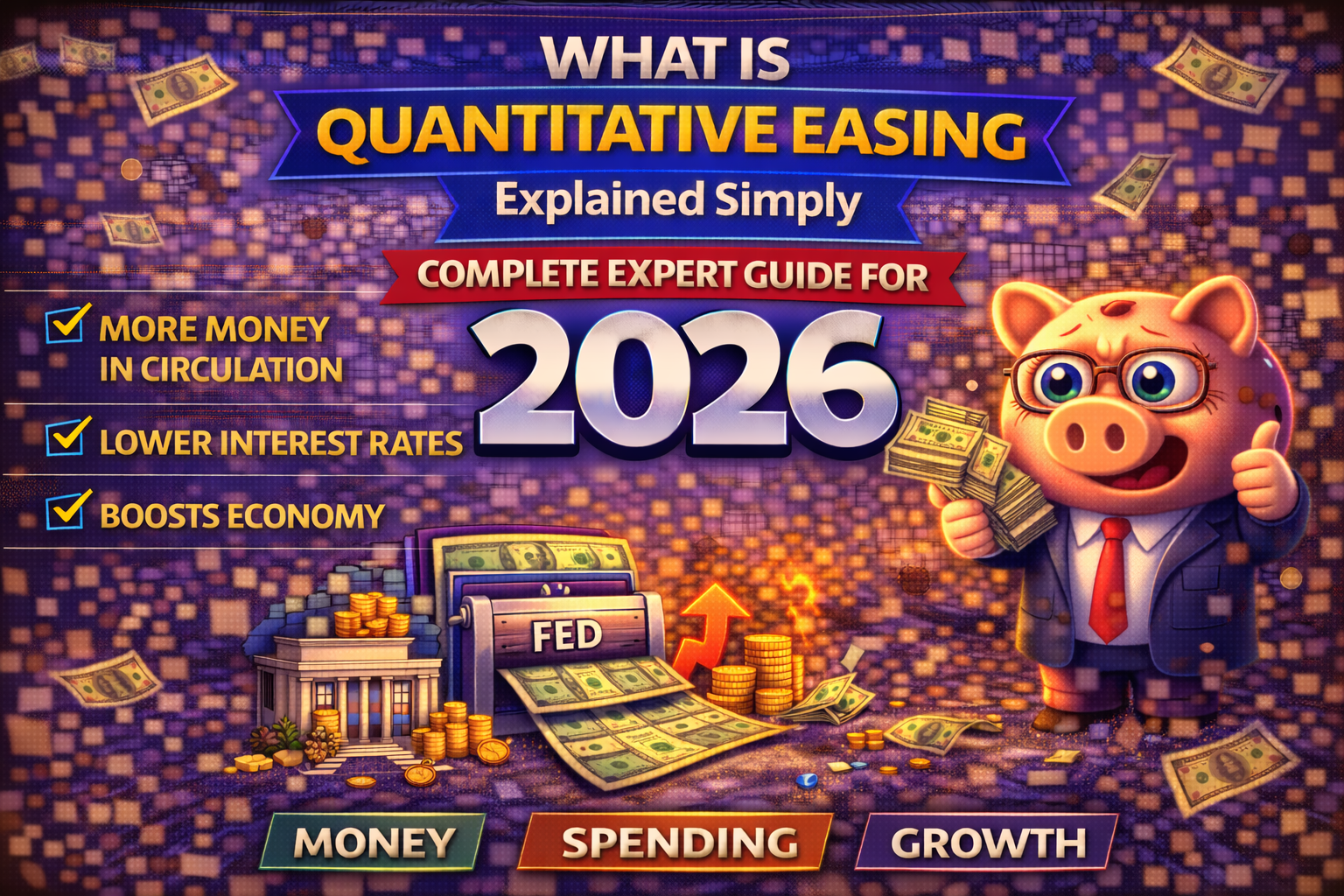
When rates fall to zero — as they did in the US, Europe, and Japan for much of the 2010s — central banks lose the ability to stimulate further through conventional rate cuts. This is when quantitative easing becomes the policy tool of choice.
Interest Rates and Currency Values
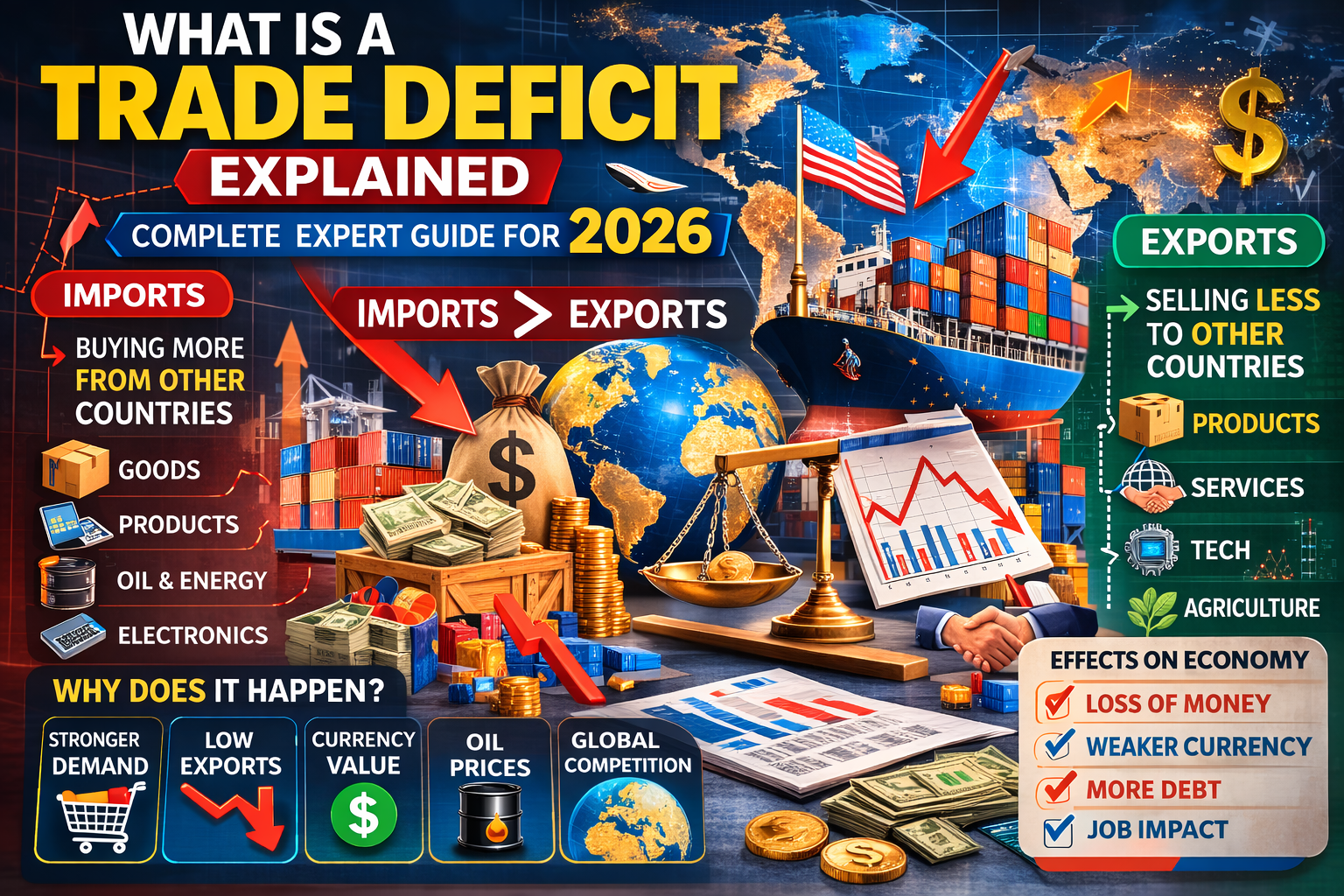
Higher interest rates attract foreign capital seeking higher returns, which increases demand for the currency and causes it to appreciate. A stronger dollar, while benefiting American consumers who import goods (making imports cheaper), hurts US exporters whose products become more expensive for foreign buyers. The Federal Reserve’s 2022-2024 rate hikes pushed the US dollar to a 20-year high, affecting global capital flows and creating financial stress for emerging market economies that borrow in dollars.
The Transmission Mechanism: Why Effects Take Time
One of the most important practical aspects of interest rate policy is the transmission lag — the time between when rates are changed and when the full economic effect is felt. Most economists estimate 12-18 months for the full effect of a rate change to work through the economy. This means central banks are always making decisions whose consequences they will not fully observe for over a year — a challenging forecasting environment that regularly produces policy errors in both directions.
Understanding this lag is essential for interpreting economic news. When the Federal Reserve raised rates sharply in 2022-2023, commentators who expected an immediate recession were wrong; the full contractionary effect took until 2023-2024 to register clearly in labour market data and economic growth.
Interest Rates and the Stock Market
Rising interest rates typically pressure equity valuations through multiple channels: higher borrowing costs reduce corporate profits; higher bond yields make the relatively safe return on bonds more attractive relative to riskier equities; and the “discount rate” used to value future corporate earnings rises, reducing the present value of those earnings. Understanding the relationship between interest rates and how the stock market affects the economy helps explain why equity markets tend to fall when rate hike cycles are more aggressive than expected.
Frequently Asked Questions
What is the neutral interest rate?
The “neutral” or “natural” interest rate is the theoretical rate at which monetary policy is neither stimulating nor restraining economic growth. It is one of the most important and most difficult-to-measure concepts in monetary policy. Most Federal Reserve officials estimated the neutral rate at around 2.5% before the pandemic; post-pandemic estimates have moved higher (toward 3-3.5%) as structural factors may have raised equilibrium interest rates. When the policy rate is above neutral, monetary policy is “restrictive” (cooling the economy); below neutral, it is “accommodative” (stimulating the economy).
How do I know if interest rate changes will affect my mortgage?
If you have a fixed-rate mortgage, your monthly payment is locked for the loan term regardless of what rates do — you are insulated from rate changes but also do not benefit if rates fall without refinancing. If you have an adjustable-rate mortgage (ARM), your rate resets periodically (typically annually after an initial fixed period) to reflect current market rates — meaning rate hikes directly increase your monthly payment. Credit cards and home equity lines of credit are typically variable rate and adjust with the policy rate within 1-2 billing cycles of a Federal Reserve decision.
Why do interest rate decisions get so much media coverage?
Federal Reserve and other central bank decisions receive extensive media coverage because they directly affect the cost of money throughout the entire economy — mortgages, business loans, government borrowing, savings rates, and asset prices. A 0.25% change in the federal funds rate affects trillions of dollars of debt and savings simultaneously. For financial markets, which are priced on expectations about future earnings and discount rates, even hints about future rate direction can move stock and bond prices significantly. The Fed’s communication — including the chair’s press conference after each meeting — is parsed extremely carefully by financial professionals seeking any signal about the future rate path.
Final Thoughts
Interest rates are the economy’s thermostat — central banks raise them to cool an overheating economy and cut them to warm a cooling one. The effects of interest rate changes are pervasive, affecting virtually every financial decision a household or business makes. Monitoring rate decisions by the Federal Reserve and understanding the difference between fiscal and monetary policy gives you essential context for understanding economic news and making better-informed financial decisions.

Arav Deshmukh is a seasoned financial journalist and lead contributor to the Economy News Writer section at Insightful Post. Specializing in the complexities of the Forex market and global investment strategies, Arav provides deep-dive analysis into fiscal policy and market shifts. His mission is to bridge the gap between high-level economic data and actionable business intelligence for modern investors.
Aarav Deshmukh is an economics journalist and financial writer with a broad expertise spanning financial markets, fiscal policy, business & startups, and geopolitics. At Insightful Post, he covers the economic stories that matter most — from inflation and market volatility to the policy decisions reshaping industries and the startup ecosystems disrupting traditional business.
What makes Aarav’s writing distinctive is his ability to connect the dots between politics, policy, and money. He understands that economic events rarely happen in isolation — a central bank decision in Washington ripples into markets in Mumbai; a geopolitical conflict reshapes global supply chains overnight. Aarav gives readers the full picture, not just the headline number.
His areas of deep focus include macroeconomic trends, equity and commodity markets, government fiscal strategy, entrepreneurship and venture capital, and the geopolitical rivalries that are redrawing the global economic map. He pays particular attention to India’s emergence as a major economic force and the opportunities and challenges that come with rapid growth.
With a strong academic grounding in economics and finance, Aarav brings both analytical rigor and journalistic accessibility to every article. He believes the best economic journalism doesn’t just explain what is happening — it tells you why it matters to your business, your savings, and your future. Outside of writing, he closely tracks global markets, follows geopolitical developments, and is an avid reader of economic history.