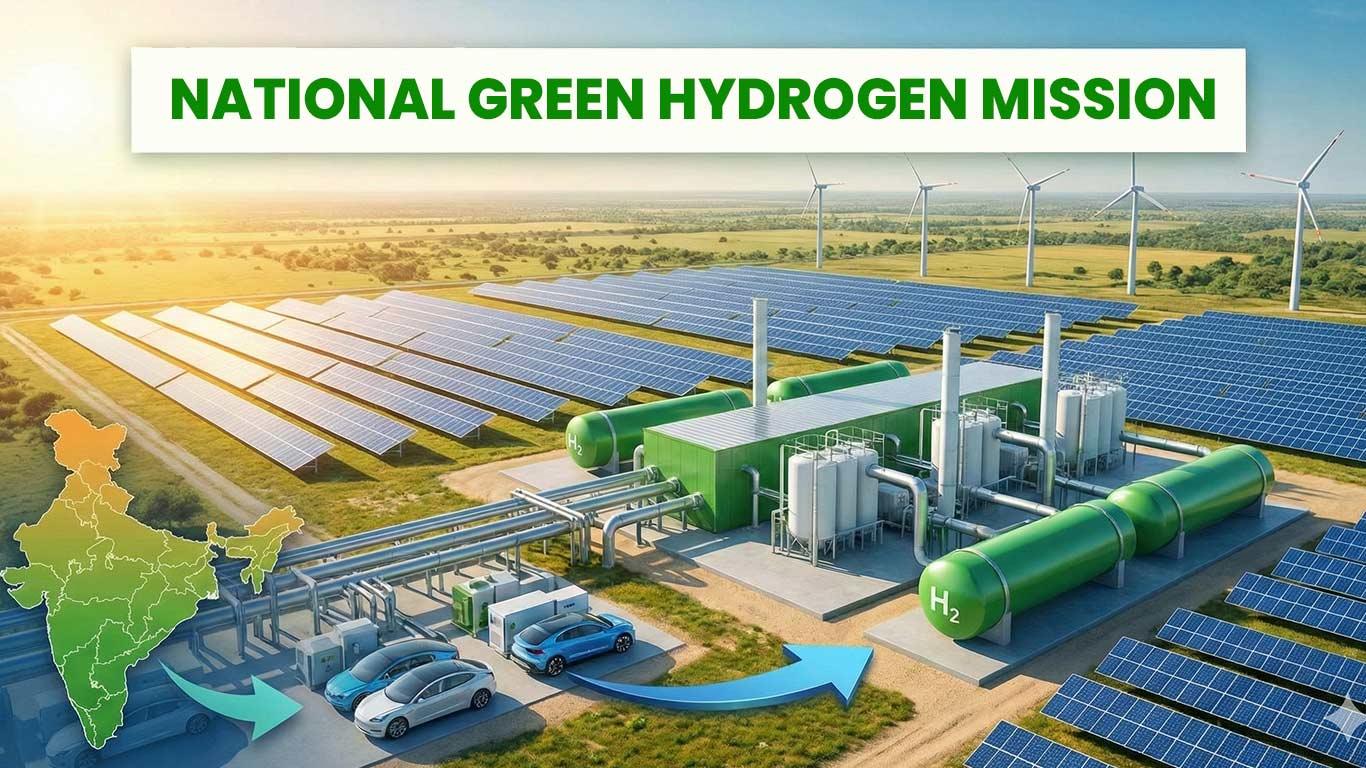
green hydrogen India 2026 is hydrogen produced by splitting water (H2O) into hydrogen and oxygen using electricity generated from renewable sources like solar or wind. Unlike “grey” hydrogen (produced from natural gas) or “blue” hydrogen (with carbon capture), green hydrogen has near-zero carbon emissions.
India’s National Green Hydrogen Mission
India launched the National Green Hydrogen Mission in January 2023 with an initial outlay of ₹19,744 crore (~$2.4 billion). The mission aims to:
- Make India a global hub for green hydrogen production and export
- Produce 5 million metric tonnes (MMT) of green hydrogen annually by 2030
- Create 125 GW of renewable energy capacity dedicated to hydrogen
- Reduce fossil fuel imports worth over ₹1 lakh crore
- Create 6 lakh+ jobs in the hydrogen value chain
Why Green Hydrogen Matters for India
India imports 85% of its petroleum and 50% of its natural gas. Green hydrogen offers a path to energy independence while meeting climate commitments. Key applications include:
- Steel Manufacturing: Replacing coal-based Direct Reduced Iron (DRI) with hydrogen
- Fertilizers: Green ammonia production for urea
- Refining: Replacing grey hydrogen in petroleum refining
- Transportation: Fuel cell buses, trucks, and railways
- Power Storage: Long-duration energy storage for grid stability
Key Projects & Players in 2026
Reliance Industries
Reliance has invested over ₹75,000 crore in its new energy business, including a massive green hydrogen ecosystem at its Jamnagar complex in Gujarat, targeting production capacity of 1 million tonnes per year.
Adani Group
Adani Green Energy is building the world’s largest green hydrogen plant in Kutch, Gujarat, with plans for 1 GW of electrolyzer capacity.
NTPC
India’s largest power generator is developing green hydrogen hubs at multiple locations, including Leh, Ladakh, and Andhra Pradesh.
Indian Oil Corporation (IOC)
IOC is setting up India’s first green hydrogen plant at its Mathura refinery, blending hydrogen with natural gas for cleaner refining.
SIGHT Programme
The Strategic Interventions for Green Hydrogen Transition (SIGHT) programme offers incentives for:
- Electrolyzer manufacturing in India
- Green hydrogen production projects
- Component development for fuel cells
Challenges
- Cost: Green hydrogen costs $4-6/kg vs $1-2/kg for grey hydrogen
- Infrastructure: Lack of hydrogen storage and transport networks
- Water: Electrolysis requires large quantities of purified water
- Technology: Electrolyzer technology is still maturing
- Regulation: Comprehensive hydrogen safety standards still evolving
Investment Opportunities
For investors, exposure to India’s green hydrogen story is possible through:
- Stocks: Reliance, Adani Green, NTPC, L&T, Indian Oil
- ETFs: Clean energy and green energy ETFs
- Green Bonds: Government and corporate green bonds
- Mutual Funds: ESG and clean energy thematic funds
Conclusion
Green hydrogen is not just an energy source — it’s India’s ticket to energy independence, climate leadership, and a new industrial revolution. While challenges remain, the combination of government support, private investment, and global tailwinds makes 2026 a breakthrough year for India’s hydrogen economy.

The official voice of Insightful Post, providing real-time updates on the stories that shape our world. From breaking global news to essential general reporting, the Admin team is dedicated to delivering accurate, timely, and unbiased information. Our mission is to keep you informed with the facts, ensuring the Insightful Post community never misses a beat in the fast-paced world of news.