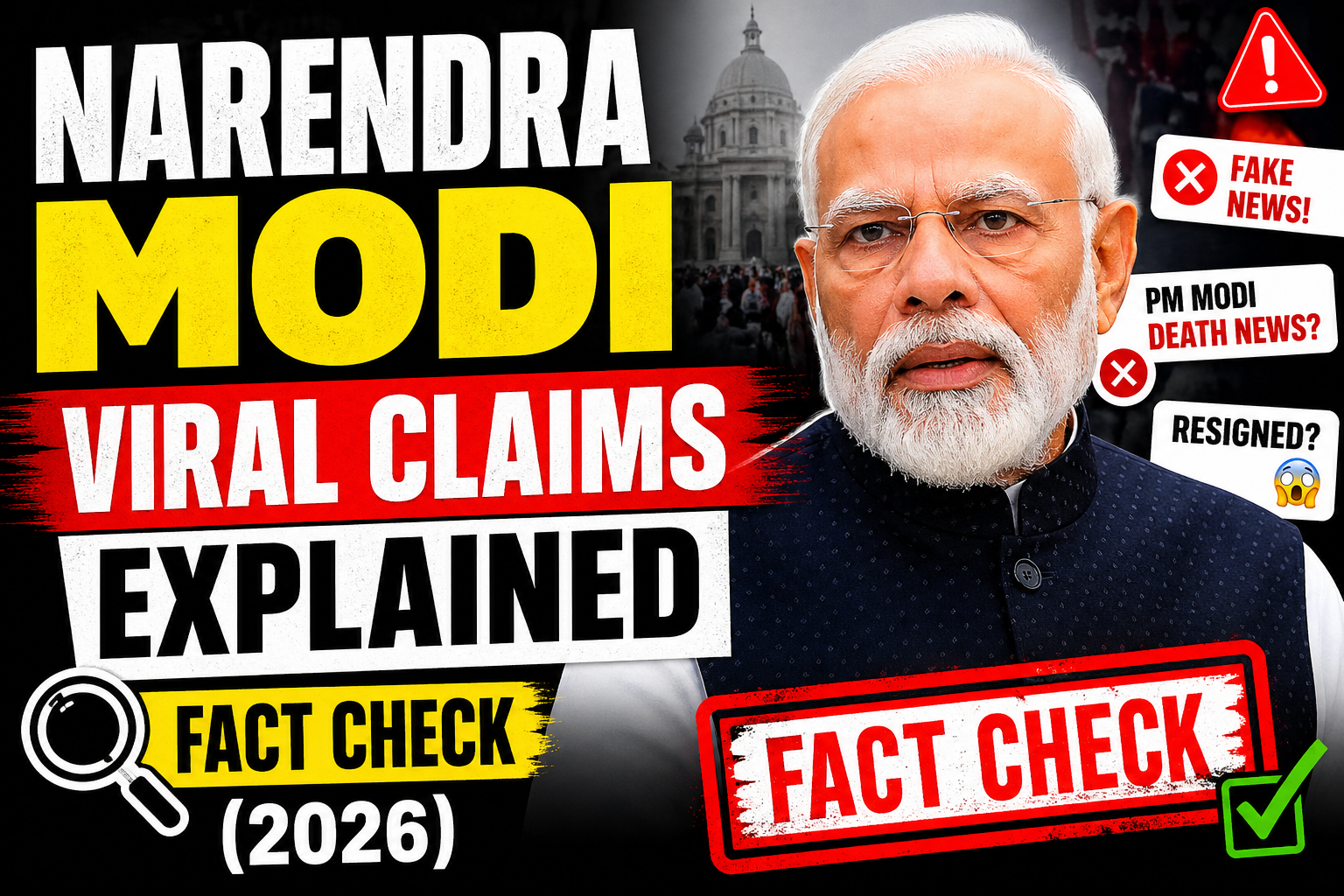
In the age of instant information, few public figures attract as much attention—and misinformation—as Narendra Modi. From viral social media posts to forwarded WhatsApp messages, claims about the Indian Prime Minister spread rapidly across platforms, often without verification.
This article takes a fact-checking approach to examine the most common types of viral claims about Narendra Modi—ranging from death hoaxes and health rumors to policy misinformation and manipulated media—and explains what’s true, what’s false, and why these rumors spread.
The Rise of Viral Claims in India
India has one of the largest digital populations in the world, and misinformation has grown alongside it. Fake news spreads through:
- Social media platforms
- Messaging apps like WhatsApp
- Edited videos and images
- Misleading headlines
According to research on misinformation in India, fake news is widely disseminated through digital media, memes, and unverified online content, often influencing public perception.
This creates an environment where viral claims about political leaders—especially Narendra Modi—can spread quickly and widely.
Common Types of Viral Claims About Narendra Modi
1. Death Hoaxes and Health Rumors
One of the most common types of misinformation involves false claims about death or serious illness.
Typical examples:
- “Narendra Modi has passed away” (false)
- “PM Modi hospitalized in critical condition” (unverified or misleading)
👉 These claims are almost always fake and originate from:
- Clickbait websites
- Fake social media accounts
- Edited screenshots
There is no credible evidence supporting such viral claims when they appear, and they are usually debunked quickly.
2. Fake Government Announcements
Another frequent category includes false policy announcements attributed to Modi or the government.
Examples:
- Nationwide lockdown rumors
- Fake financial schemes
- False emergency declarations
In one instance, authorities had to dismiss rumors of a nationwide lockdown and martial law, which were circulating via audio clips and messages.
👉 These claims often:
- Use official-looking language
- Mimic government formats
- Spread rapidly during crises
3. Manipulated Images and Videos
Visual misinformation is particularly powerful.
Common tactics include:
- Edited images showing Modi doing something controversial
- Old videos presented as new
- AI-generated or altered clips
Fact-checking organizations frequently debunk such content, noting that manipulated media is a major driver of misinformation online.
4. Misleading Quotes and Statements
Another viral pattern involves quotes falsely attributed to Narendra Modi.
Examples:
- Fake speeches
- Out-of-context statements
- Edited interview clips
Sometimes, real speeches are selectively edited to change meaning, which can mislead viewers.
5. Political Propaganda and Disinformation
Misinformation is often tied to political narratives.
- Some claims are designed to support a political agenda
- Others aim to criticize or discredit
Studies show that fake news in India is sometimes used as a tool to influence public opinion and political discourse.
Why Do These Rumors Go Viral?
📱 1. Social Media Speed
Information spreads faster than ever. A single post can reach millions within minutes.
🧠 2. Emotional Triggers
Rumors often use:
- Fear (“breaking news”)
- Shock (“unexpected death”)
- Anger (“controversial decision”)
These emotions drive sharing without verification.
🔁 3. Forward Culture
India has a strong message-forwarding culture, especially on WhatsApp, which amplifies misinformation.
📉 4. Lack of Verification
Many users:
- Don’t check sources
- Trust forwarded messages
- Assume viral = true
Real-World Impact of Fake News
Misinformation is not harmless—it has serious consequences.
- Public panic (e.g., lockdown rumors)
- Damage to reputations
- Political polarization
- Social unrest
In extreme cases, misinformation in India has even contributed to violence and public harm, highlighting the seriousness of the issue.
How Fact-Checking Works
Fact-checking organizations use multiple methods:
✅ Source Verification
- Checking official government statements
- Cross-referencing credible news outlets
🖼️ Image Analysis
- Reverse image search
- Metadata verification
🎥 Video Verification
- Identifying original source
- Checking timestamps and edits
📊 Data Validation
- Comparing claims with official data
These steps help separate truth from viral misinformation.
How to Identify Fake Claims About Narendra Modi
Here are simple checks you can use:
🔍 1. Check the Source
Is it from a trusted news organization?
📰 2. Look for Official Confirmation
Government announcements are published on official platforms.
⚠️ 3. Beware of “Breaking News” Without Proof
Fake posts often use urgency to trick readers.
🖼️ 4. Verify Images and Videos
Search if the media is old or edited.
📅 5. Check the Date
Old news is often reshared as current.
Role of Government and Media
The Indian government and media organizations actively work to counter misinformation.
- Fact-checking units monitor viral claims
- News platforms publish debunks
- Awareness campaigns educate citizens
However, the challenge remains significant due to the scale of digital communication.
The Bigger Picture: Misinformation in the Digital Age
Misinformation is not limited to one person or country—it’s a global issue.
In India, the combination of:
- Massive internet usage
- Diverse languages
- Rapid social sharing
makes it particularly complex.
Even the Prime Minister has previously urged citizens to avoid believing and spreading rumors, especially during sensitive times.
Conclusion
Viral claims about Narendra Modi—whether about death, health, policies, or controversies—are a regular feature of the modern information ecosystem.
Explanation:
The viral claims circulating online are not supported by any official or credible sources. Most of these rumors originate from unverified social media posts, edited videos, or misleading messages.

The official voice of Insightful Post, providing real-time updates on the stories that shape our world. From breaking global news to essential general reporting, the Admin team is dedicated to delivering accurate, timely, and unbiased information. Our mission is to keep you informed with the facts, ensuring the Insightful Post community never misses a beat in the fast-paced world of news.