
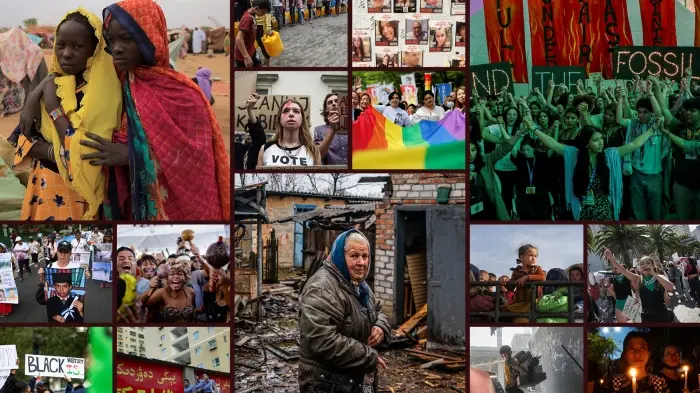
News reporting looks very different depending on where in the world you are standing. The press freedom, ownership structures, professional traditions, economic models, and political constraints that shape journalism vary so significantly across countries that a journalist in Oslo and one in Minsk are operating in essentially different professions despite both calling themselves journalists.
This guide examines how news is reported around the world — what differs, what is universal, and what these differences mean for how you should evaluate international news coverage.
Press Freedom: The Global Landscape
Press freedom — the ability of journalists to report independently without government interference, censorship, or threat of violence — varies more widely globally than most people realise. Reporters Without Borders (RSF) publishes an annual World Press Freedom Index ranking 180 countries on press freedom conditions. The 2024 index presents a deeply unequal picture.
The top-ranked countries are predominantly Nordic: Norway, Denmark, Sweden, and Finland consistently occupy the top positions, reflecting strong legal protections for press freedom, independent public broadcasters, healthy private media markets, and a cultural tradition of government transparency. Ireland, the Netherlands, and Estonia have also consistently ranked near the top in recent years How News Is Reported Around the World.
At the other extreme, countries including North Korea (ranked last), Eritrea, and Turkmenistan maintain total state control over all media — there is no independent journalism in these countries, and the “news” produced is essentially government propaganda. China — the world’s second-largest economy and a global power — ranks near the bottom (172nd in 2024), with extensive censorship, surveillance of journalists, and imprisonment of reporters covering topics the government deems sensitive.
The United States has slipped significantly in recent years — ranking 55th in the 2024 index — reflecting concerns about media concentration, political hostility toward journalists, and incidents of journalist arrests during protest coverage. Western Europe’s democracies generally rank in the top 20-30.
Globally, RSF documented a worsening environment for journalism in its 2024 report. 55% of countries showed “bad” or “very bad” conditions for press freedom. Journalist murders, imprisonments, and harassment are increasing — primarily in Asia, the Middle East, and Latin America.
Media Ownership: Who Pays for Journalism and Why It Matters
How News Is Reported Around the World, Media ownership is one of the most important and least discuss factors in how news is reported. The entity that pays for journalism inevitably influences what that journalism covers, how it frames stories, and what it declines to report.
State-owned media exists on a spectrum from genuinely editorially independent public service broadcasters (BBC, CBC, ABC Australia, ARD Germany, NHK Japan) to state propaganda organs (CCTV China, RT Russia). The distinguishing factor is not ownership per se but governance — whether the editorial function is genuinely protect from political interference. The BBC’s charter explicitly protects its editorial independence; the requirement in law that its Director-General can be removed by government fiat is a theoretical vulnerability that has not, in practice, substantially compromised its journalism. RT exists to project Russian government viewpoints internationally and is explicitly not editorially independent.
Privately owned commercial media How News Is Reported Around the World exists on an equally wide spectrum. The Financial Times, owned by Japan’s Nikkei, maintains high journalistic standards with genuine editorial independence from its owner. The New York Times, publicly traded with a dual-class share structure protecting the Sulzberger family’s editorial control, has maintained editorial independence. At the other extreme, media controlled by political actors in countries including Hungary (where Victor Orbán’s allies have consolidated control over most national media), and several Latin American countries, effectively function as political tools despite nominal private ownership.
Non-profit journalism has grown significantly as a model. ProPublica, The Texas Tribune, The Marshall Project, and hundreds of similar organisations fund journalism through foundations, individual donors, and sometimes government grants without advertising or subscription revenue. This model offers independence from commercial pressure but creates dependencies on funders whose interests may shape coverage in subtler ways.
National Journalism Traditions: How They Differ
Different countries have develop distinct journalism traditions that shape how stories are told, what counts as newsworthy, and what standards govern reporting How News Is Report Around the World.
Anglo-American journalism is built on the norm of objectivity — the separation of news report from opinion, the requirement for attribution and balance, and the professional aspiration of political neutrality in news coverage. This tradition, develop through the late 19th and 20th centuries, is now widely emulate globally but also widely criticised for producing “false balance” and obscuring the journalist’s own perspective rather than genuinely achieving neutrality.
European advocacy journalism traditions — particularly in France, Germany, and Scandinavia — have historically been more comfortable with journalism that takes explicit positions while maintaining factual standards. German newspapers like Die Zeit and Der Spiegel have strong analytical and editorial voices that would be unusual in Anglo-American news culture.
Japanese journalism operates under a distinctive “kisha club” system — exclusive press clubs associated with government agencies, corporations, and political parties that grant access to official sources in exchange for implicit restrictions on critical reporting. This system has widely criticis by press freedom organisations as structurally compromising independent reporting.
Tabloid journalism traditions — particularly strong in the UK (The Sun, Daily Mail) and Germany (Bild) — represent distinct media cultures in which celebrity and human interest news, aggressive political partisanship, and populist frames are central to editorial identity. Understanding that the UK tabloid press operates under different values than the quality press is essential for evaluating British media coverage.
How to Use International News Sources Effectively
Understand how news is report differently around the world helps you build a more sophisticat international news diet.
For coverage of any given country, the best sources are often domestic — provided they have genuine editorial independence. Norwegian coverage of Norwegian politics, Indian coverage of Indian elections,
or Brazilian coverage of Brazilian economics will generally have more context, sourcing depth, and nuance than international coverage of the same subjects. The challenge is accessing and evaluating sources in languages you may not read.
English-language international coverage is significantly better resource than it was a deca ago. BBC World Service, Reuters, AP, Bloomberg, and the Financial Times collectively provide English-language coverage of most parts of the world with professional standards. Country-specific English-language outlets — The Hindu (India), Haaretz English edition (Israel),
South China Morning Post (Hong Kong) — provide additional depth for specific regions How News Is Report Around the World.
Frequently Asked Questions
Which country has the freest press in the world?
Norway has ranked first in the RSF World Press Freedom Index for multiple consecutive years, followed closely by other Nordic countries (Denmark, Sweden, Finland) and Ireland. These countries combine strong constitutional and legal protections for press freedom, independent public broadcasting, healthy private media markets, high trust between journalists and the public,
and minimal government interference with editorial decisions. They are also small, wealthy, highly educate, and politically stable societies — factors that create conditions conducive to press freedom that are not easily replicat in larger, poorer,
or more politically contested contexts.
How can I tell if a foreign news source is reliable?
The same criteria that apply to domestic sources apply internationally: Does the outlet clearly identify its ownership and funding? Does it maintain clear distinctions between news and opinion? Does’s it attribute claims to named sources? Does it have a transparent correction process? Does it cover its own country’s government critically when warranted? For assessing international sources specifically,
RSF’s country rankings give useful context about the operating environment; the Committee to Protect Journalists (cpj.org) documents threats to journalist safety; and Freedom House (freedomhouse.org) provides country-level assessments of press freedom conditions.
Is the BBC truly independent from the UK government?
The BBC’s editorial independence is structurally protect through its Royal Charter, which establishes its mission as serving the public interest, and through a governance structure designed to insulate editorial decisions from political influence. In practice, the BBC operates under significant political pressure — its licence fee funding is periodically up for renewal and negotiation with government,
its leadership appointments involve government influence, and it operates in a politically polarised environment that accuses it of bias from both left and right. The BBC is genuinely more independent from UK government control than most state-associated broadcasters worldwide, and its journalism consistently demonstrates that independence. But characterising it as perfectly insulat from political pressure would overstate the case How News Is Report Around the World.
Final Thoughts
Understanding how news is report around the world is not merely comparative curiosity — it is essential context for evaluating any international news you consume. The sources, incentives, pressures,
and professional traditions that shape journalism differ so significantly across contexts that the same event can produce genuinely different news coverage in different national media systems — not because of factual disagreement but because of different professional values, different ownership pressures,
and different political environments. Keeping this in mind as you consume international news is one of the most practical applications of news literacy.

The official voice of Insightful Post, providing real-time updates on the stories that shape our world. From breaking global news to essential general reporting, the Admin team is dedicated to delivering accurate, timely, and unbiased information. Our mission is to keep you informed with the facts, ensuring the Insightful Post community never misses a beat in the fast-paced world of news.



One thought on “How News Is Reported Around the World: Global Journalism in 2026”