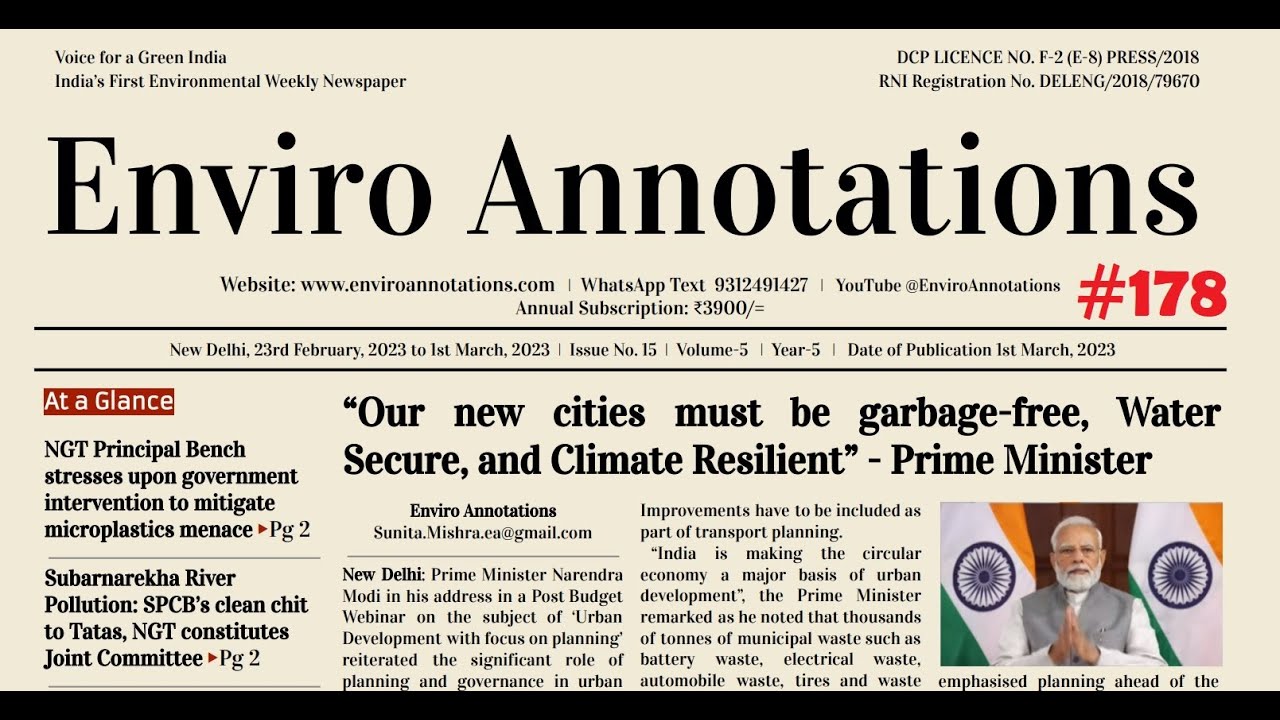
The environmental news of 2025-2026 has been characterised by record-breaking climate data, significant policy developments, and both alarming findings about ecological deterioration and genuine progress on clean energy transition. This guide covers the most important environmental stories with the specific data and context needed to understand their significance.
Climate Records: The Data That Matters
2023 was confirmed as the warmest year in recorded history by NASA, NOAA, the EU’s Copernicus Climate Change Service, and the UK Met Office — all independently arriving at the same conclusion. The global average temperature in 2023 was approximately 1.45°C above the 1850-1900 pre-industrial baseline, within a fraction of the Paris Agreement’s 1.5°C threshold.
The record was not merely statistical — it was accompanied by a cascade of extreme events. July 2023 was the hottest month ever recorded. The Antarctic sea ice extent reached a record low in February 2023 and again in subsequent months, with the anomaly from the average so extreme that it alarmed polar scientists. Ocean surface temperatures broke records in 2023 by margins that surprised climate scientists — the North Atlantic in particular ran at unprecedented temperatures for months.
The cause of the exceptional 2023 heat — beyond the underlying trend of human-caused climate change — was partially attributed to the development of a strong El Niño weather pattern from mid-2023. El Niño events temporarily add additional warming on top of the underlying trend. With El Niño peaking in late 2023 and early 2024, climate scientists projected 2024 to potentially exceed 2023 as the warmest year — which it did, with the global average temperature in 2024 reaching approximately 1.54°C above the pre-industrial baseline, technically breaching the 1.5°C threshold on a calendar-year basis for the first time.
Biodiversity: The Crisis Alongside Climate
While climate change receives the majority of environmental news attention, biodiversity loss is an equally severe planetary crisis. The Intergovernmental Science-Policy Platform on Biodiversity and Ecosystem Services (IPBES) — essentially the IPCC equivalent for biodiversity — has documented a rate of species extinction estimated to be 100-1,000 times the natural background rate.
The December 2022 Kunming-Montreal Global Biodiversity Framework, agreed at COP15 in Montreal, set an ambitious target of protecting 30% of the world’s land and ocean by 2030 (the “30×30” target). Implementation reporting from 2024 shows uneven progress — several countries have expanded protected area designations, but protection on paper does not always translate to effective conservation on the ground, and the most biodiverse areas are often in countries with the least resources for conservation.
Specific biodiversity news of 2024-2026 includes continued documentation of coral reef bleaching events driven by record ocean temperatures. The Great Barrier Reef experienced its most severe and extensive bleaching on record in 2024, with the Australian Institute of Marine Science reporting bleaching across 73% of surveyed reefs. Mass bleaching events have occurred in five of the past nine years — a frequency that significantly exceeds historical patterns.
Plastic Pollution: The Global Treaty Process
One of the most significant environmental policy developments of recent years has been the process toward a global plastics treaty. In March 2022, the United Nations Environment Assembly unanimously agreed to develop a legally binding global agreement to end plastic pollution by 2040. Negotiations — the Intergovernmental Negotiating Committee (INC) sessions — have been complex and contentious, with oil-producing countries and plastic producers opposing ambitious provisions while environmental advocates and many countries push for a comprehensive agreement covering the full lifecycle of plastics.
The scale of the problem is substantial: approximately 400 million tonnes of plastic waste are generate globally each year, of which less than 10% is recycled. Approximately 11 million tonnes enter the ocean annually. Microplastics — tiny plastic fragments resulting from the breakdown of larger plastic items — have found in human blood, breast milk, placentas, and virtually every environment sampled globally. The health implications of microplastic exposure are still being studied but are generating significant concern in the scientific community.
Clean Energy: The Numbers Behind the Transition
The clean energy transition is the most consequential economic transformation occurring in parallel with the environmental crises it is design to address. The data on renewable energy deployment is genuinely encouraging, though the pace relative to climate science requirements remains a critical question.
In 2023, the world added more renewable energy capacity than in any previous year — approximately 295 gigawatts (GW) of solar capacity alone, more than the entire installed capacity of some major economies. For the first time in 2023, more than half of all new electricity generation capacity added globally was solar. The cost of solar electricity has fallen by approximately 90% over the past decade and continues to decline.
Wind energy additions were also record-breaking in 2023, with China in particular deploying wind at extraordinary scale. Electric vehicle sales reached 14 million globally in 2023 — approximately 18% of all new car sales — driven primarily by China, where EVs accounted for approximately 35% of new car sales.
The challenge is that fossil fuel use has not yet peaked despite renewable deployment — global demand for coal, oil, and natural gas continued to grow or remain at elevated levels in 2023-2024. The International Energy Agency has project that global fossil fuel demand will peak before 2030, but this projection depends on policy and investment decisions that are not yet locked in.
Deforestation and Land Use
Land use change — primarily tropical deforestation — remains responsible for approximately 10-15% of global greenhouse gas emissions and is the leading driver of terrestrial biodiversity loss. Amazon deforestation, which peaked under Brazil’s Bolsonaro government, has declined significantly since Lula’s return to power — INPE (Brazil’s space research institute) reported a 50% reduction in Amazon deforestation in the first year of Lula’s presidency. This is significant progress but from a peak that was far above sustainable levels.
Indonesian and Malaysian tropical forests — primarily the peatland forests of Borneo and Sumatra — face ongoing pressure from palm oil expansion despite commitments from major palm oil producers to end deforestation. Congo Basin forests, the world’s second-largest tropical forest, are facing increasing pressure as population growth and agricultural expansion accelerate in Central Africa.
Frequently Asked Questions
What does “net zero” mean for governments and companies?
Net zero refers to a state where greenhouse gas emissions release are balance equivalent removals — either through natural carbon sinks (forests, soils, oceans) or through carbon capture and storage technology. The timing, comprehensiveness, and credibility of net zero commitments vary enormously. The most credible net zero commitments are those backed by detailed transition plans with interim milestones, independent verification, and alignment with science-based pathways. The Climate Action Tracker (climateactiontracker.org) provides independent assessments of national climate commitments’ credibility and sufficiency. Many corporate net zero pledges, by contrast, rely heavily on offsets of uncertain quality rather than actual emission reductions.
What is the most important environmental story that receives too little coverage?
Soil degradation and the loss of agricultural soil health receives far less attention than climate change or biodiversity loss but has equally severe long-term implications for human civilisation. The FAO estimates that approximately 33% of global soils are already degrade to some degree, and that current rates of soil loss are far faster than rates of soil formation — which occurs over centuries to millennia. Soil is the foundation of virtually all food production and stores more carbon than all the world’s forests combined. Its degradation is both a symptom of unsustainable agricultural practices and a driver of food insecurity, erosion, and further carbon release.
How reliable is environmental news?
Environmental news quality varies significantly. The best sources — Carbon Brief, Inside Climate News, The Guardian’s Environment section — maintain rigorous standards for citing peer-reviewed research and distinguishing established science from preliminary findings. Some mainstream media coverage of environmental topics oversimplifies research findings, presents preliminary studies as established conclusions, or introduces inappropriate false balance by giving equal weight to fringe positions and scientific consensus. And some environmental advocacy organisations communicate research in ways that emphasise worst-case scenarios. Checking environmental news against primary scientific sources — IPCC reports, IPBES assessments, peer-reviewed journals — and against science-focused outlets like Carbon Brief provides the most reliable understanding.
Final Thoughts
The environmental news of 2026 reflects a planet at a genuine inflection point — where the consequences of decades of industrial activity are becoming impossible to ignore, where the policy and technological responses are gathering pace, but where the pace of response and the scale of existing ecological damage create genuine uncertainty about outcomes. Following environmental news accurately requires the same tools as following any complex news: reliable primary sources, understanding of the underlying science, and scepticism toward both comforting minimisation and paralysing catastrophism. The stakes make it worth the effort Environmental News.

The official voice of Insightful Post, providing real-time updates on the stories that shape our world. From breaking global news to essential general reporting, the Admin team is dedicated to delivering accurate, timely, and unbiased information. Our mission is to keep you informed with the facts, ensuring the Insightful Post community never misses a beat in the fast-paced world of news.