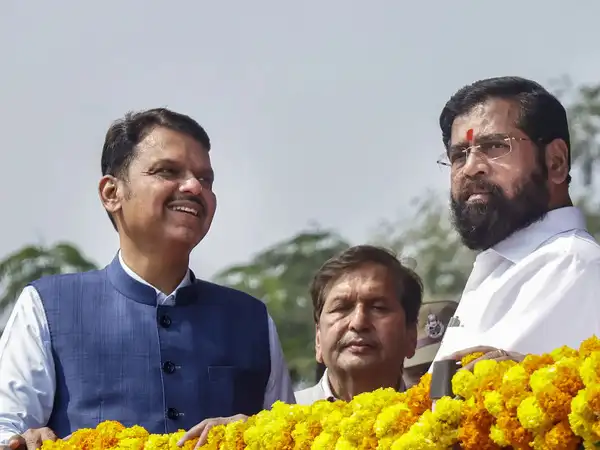
As the Brihanmumbai Municipal Corporation (BMC) elections draw near, Maharashtra Deputy Chief Minister and Shiv Sena leader Eknath Shinde has delivered a robust political message on Mumbai’s identity, governance, and the stakes in the municipal polls. In an extensive interview ahead of the civic elections, Shinde dismissed rival narratives and laid out his party’s vision for India’s richest civic body, framing the contest as a referendum on development and political credibility.
Shinde’s comments come against the backdrop of a rejuvenated alliance between Uddhav Thackeray’s Shiv Sena (UBT) and Raj Thackeray’s Maharashtra Navnirman Sena (MNS), which is seeking to challenge the ruling Shiv Sena-BJP Mahayuti alliance in the Mumbai civic polls. The elections, covering 29 municipal corporations including the crucial BMC, are widely seen as a test of political strength ahead of future state and national contests.
Rejects Rival Narrative, Reasserts Mumbai’s Identity
One of the central points Shinde made in the interview was a firm rejection of the idea that Mumbai could be divided or separated based on identity politics. “Mumbai is not a cake to be cut into pieces and separated,” he said, countering criticism that his alliance was out of touch with regional sentiments. According to Shinde, efforts to stoke fears about Marathi identity by his opponents are opportunistic and will not withstand voter scrutiny.
Shinde sharply rebuked the opposition’s focus on issues of Marathi manoos identity, stating that such themes are raised for electoral convenience and later forgotten. He stressed that both he and Chief Minister Devendra Fadnavis share Marathi identity, dismissing the “fake narratives” that suggest otherwise.
Read More: Latest News
Thackeray Alliance — Big Crowd, Limited Votes?
Addressing the challenge posed by the Thackeray cousins’ alliance, which has drawn large crowds at recent campaigns, Shinde maintained that mass rallies do not automatically translate into votes. He argued that what counts in elections is constructive work and governance achievements rather than rhetorical displays.
Shinde pointed to infrastructure progress under the current Mahayuti government, including expansions in the metro network, improved road construction, and coastal developments, positioning these as tangible accomplishments compared to what he described as the rhetoric of his rivals.
Controversy Over BJP Leaders’ Remarks
In the interview, Shinde also addressed controversial remarks made by certain BJP leaders regarding Mumbai’s status and cultural identity. While expressing clear disapproval of remarks that he felt distorted Mumbai’s ethos, Shinde said he had conveyed his concerns directly to his party’s leadership. He emphasized that such comments should not be treated as official party positions and that differences, where they arise, are resolved internally.
This comments reflect efforts to maintain unity within the Shiv Sena-BJP Mahayuti alliance, even as local leaders occasionally clash on narrative and strategy. Shinde reiterated that cooperation remains intact and that coordination between allied leaders is ongoing.
Development Record at the Forefront
Shinde repeatedly brought the discussion back to governance and development, arguing that the Mahayuti government has delivered concrete results after years of stalled progress. He credited the current regime with accelerating stalled projects — such as Mumbai’s coastal road and the metro expansion — and highlighted efforts to revitalize infrastructure and housing.
He also defended the performance of his alliance and the state government, asserting that their agenda addresses real challenges facing Mumbai, from traffic congestion to sewage management. Highlighting improvements and future plans, Shinde’s interview underscored a campaign strategy focused on practical urban development over emotive electoral rhetoric.
Managing Alliance Dynamics
Shinde’s remarks also touched on dynamics within the Mahayuti alliance itself, particularly with the BJP. While local contests in Navi Mumbai and Ambernath have seen candidates from the two parties compete against each other in some seats, Shinde described these as tactical decisions at the local level rather than reflections of deep discord within the alliance. He said discussions with the Chief Minister and allied leaders help navigate such issues, ensuring overall alliance unity.
His comments on party collaboration come amid broader moves by the Mahayuti partners to project a coherent front ahead of the civic polls, aiming to leverage their combined organizational strength and governance narrative. Independent reports from the campaign trail also indicate that leaders in the alliance are actively coordinating to maximize their electoral gains across Mumbai and beyond.
Read More: Entertainment
Eye on the BMC and Future Politics
The BMC election holds particular significance due to the corporation’s financial clout and political prestige. Historically dominated by the Shiv Sena for more than two decades, the BMC has remained a symbolic bastion of regional pride and administrative power. The polls this year, however, have taken on added complexity due to internal party splits, shifting alliances, and heightened competition from rival blocs.
Shinde was clear in stressing that winning the BMC is not merely about retaining control but also about charting a developmental roadmap for the city. He asserted that a victory for the Mahayuti alliance would ensure continuity in projects and governance models, asserting that political stability is essential for long-term urban planning.
Conclusion
Eknath Shinde’s interview paints a picture of an election campaign rooted in contrasting visions of governance and identity. With less than a week to go before polling day, the deputy CM has sought to frame the BMC elections as a choice between development-oriented leadership and fear-based politics, emphasizing achievements over rhetoric. His confidence in Mahayuti’s prospects reflects the high stakes of this civic battle — one that could influence political narratives in Maharashtra well beyond the municipal corridors.